
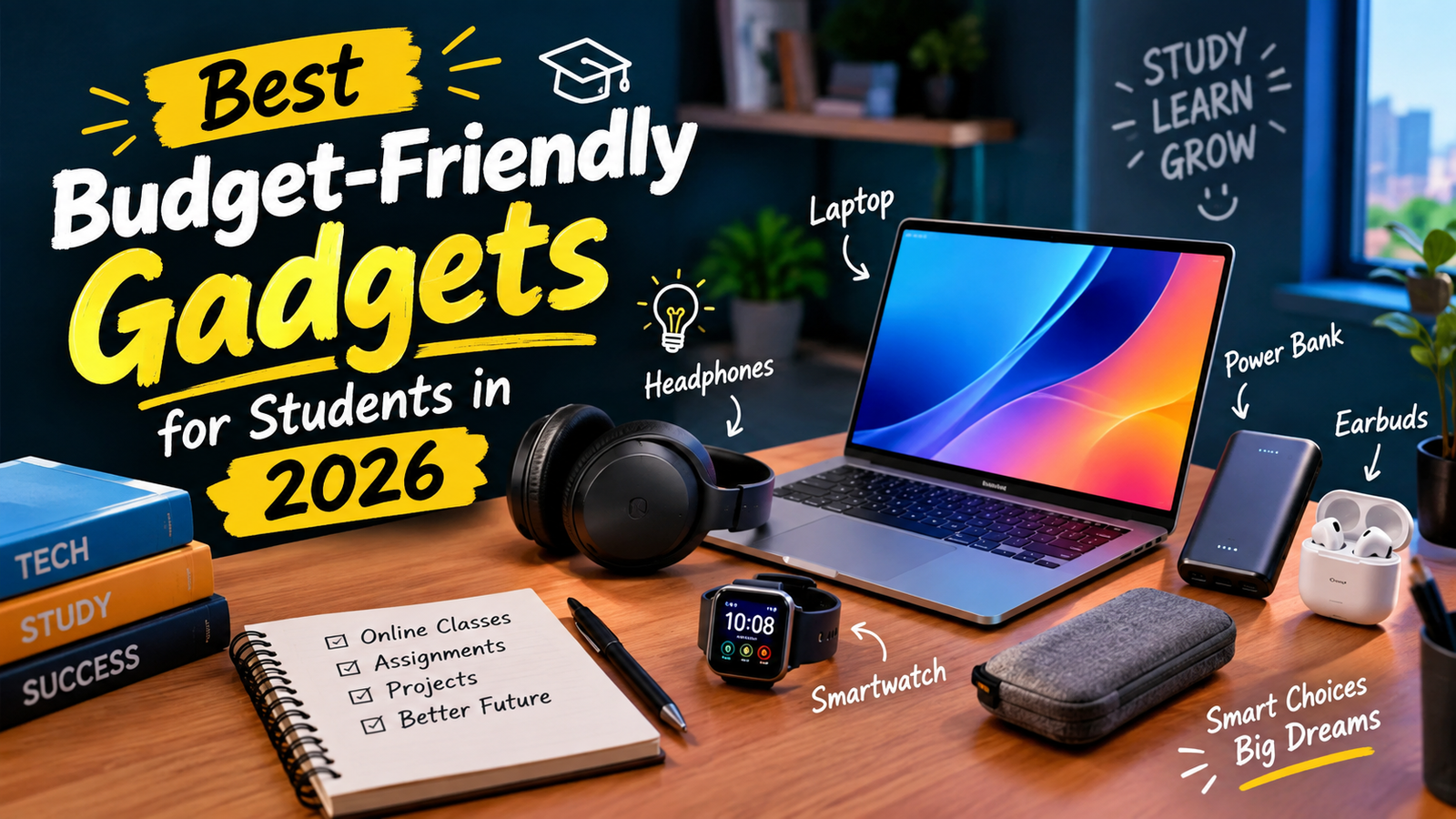
Every student knows the feeling. Your laptop battery dies twenty minutes before a submission deadline, your hostel roommate is watching reels at full volume while you’re trying to revise, and your phone storage is full of lecture recordings you can’t delete. Good tech fixes these problems. The catch is that most student budgets don’t stretch to premium gear.
The good news: they don’t have to. The best budget-friendly gadgets for students today cost a fraction of what similar devices cost five years ago, and many of them work just as well as their expensive cousins for everyday academic use.
This guide covers seven affordable gadgets worth buying, what to look for in each, roughly what you should expect to pay in India, and which ones you can safely skip. No affiliate hype, just practical picks.
Why the Right Gadgets Matter More Than Expensive Ones

There’s a common assumption that better tech means better grades. It doesn’t. What actually helps is removing friction from your study routine, and cheap tools do that surprisingly well.
A ₹1,500 pair of earbuds that blocks out hostel noise will improve your focus more than a ₹90,000 laptop you bought for “future-proofing.” The role of gadgets in education is to save time and reduce distraction, not to look impressive on your desk.
Before buying anything, ask yourself two questions: what specific problem does this solve, and will I use it at least three times a week? If you can’t answer both, skip it.
1. Wireless Earbuds Under ₹2,000

This is the single most useful purchase for most students. Shared rooms, noisy libraries, crowded metros, and online lectures all demand decent audio.
What to look for: at least 6 hours of playback on a single charge, a USB-C charging case, and low-latency mode if you attend live classes. Environmental noise cancellation (ENC) on the mic matters more than ANC for most students, because it makes you audible during viva sessions and group calls.
Brands like boAt, realme, Noise, and OnePlus Nord all sell capable options in the ₹1,000–₹2,500 range. Skip anything without a proper warranty, however tempting the price.
2. A Power Bank That Actually Charges Your Laptop
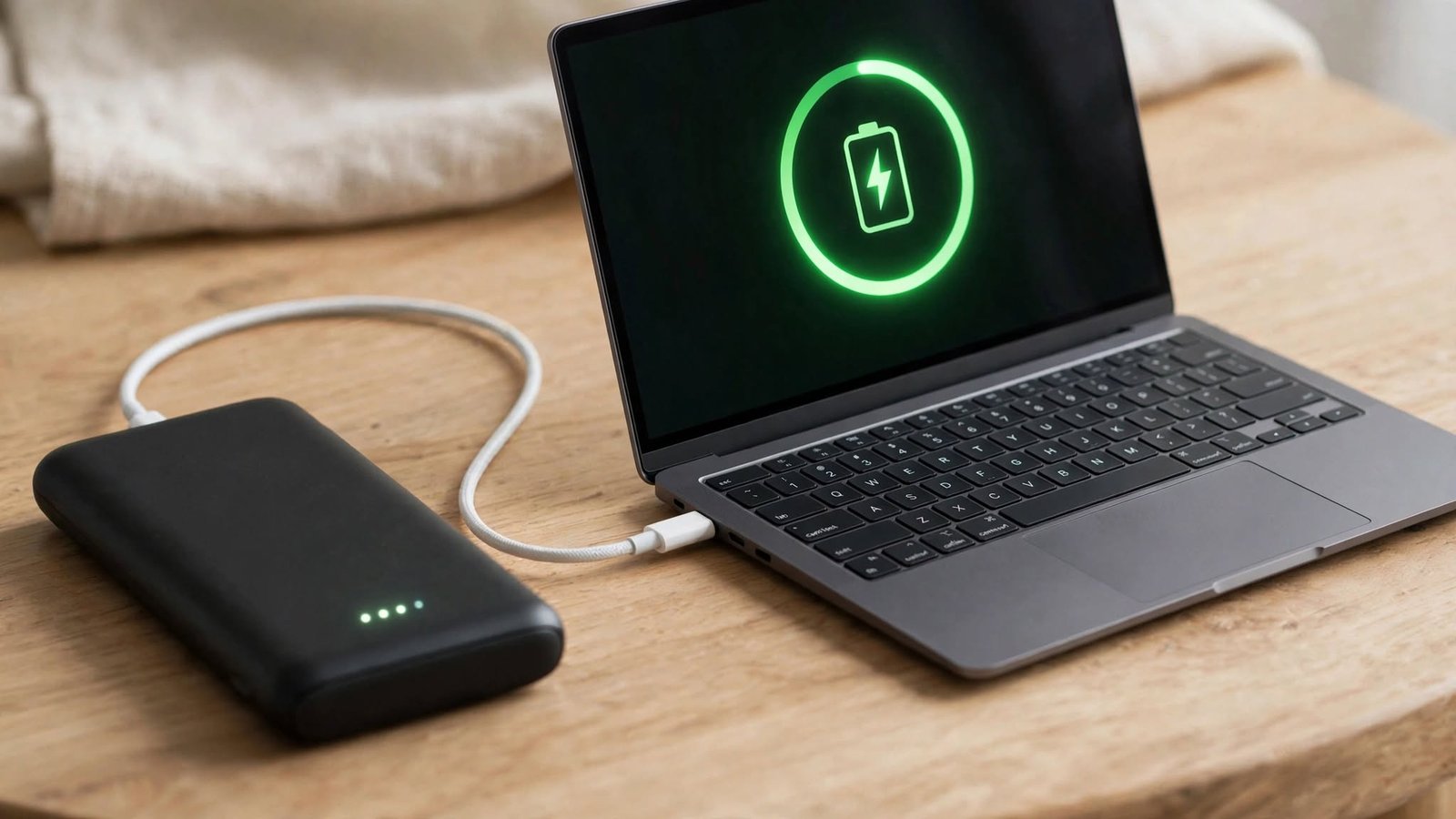
Standard 10,000mAh power banks are fine for phones. But if you’re carrying a laptop between classes, look for a 20,000mAh unit with Power Delivery (PD) output of 45W or higher. This can top up most thin laptops and charge your phone at the same time.
Expect to pay ₹1,800–₹3,000. Check that the capacity is certified, and avoid unbranded units entirely. A bad power bank is a fire risk, not a bargain.
Quick tip on airline and hostel rules
Most colleges are fine with power banks, but flights restrict anything above 27,000mAh. A 20,000mAh unit keeps you in the safe zone for internships and semester travel.
3. A Portable SSD or a High-Speed Pen Drive
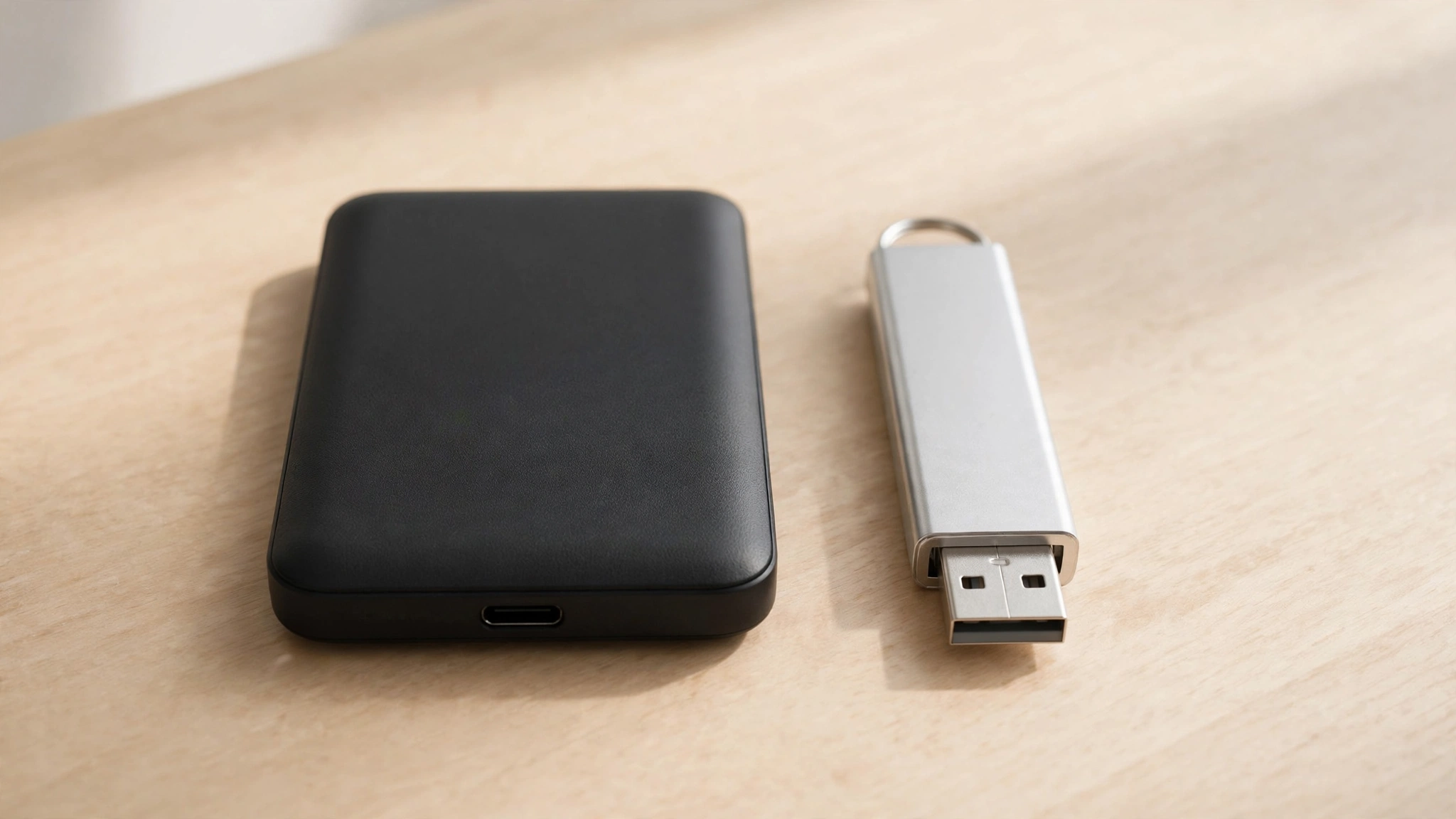
Cloud storage is convenient until your hostel Wi-Fi drops during upload. For design students, engineering students working with large project files, or anyone submitting video assignments, physical storage is still essential.
A 256GB portable SSD costs around ₹2,500–₹4,000 and transfers files in seconds rather than minutes. If your needs are lighter, a 128GB USB 3.2 pen drive at ₹800–₹1,200 does the job.
Practical habit: keep three copies of any major project. One on your laptop, one on cloud storage, one on the SSD. This has saved more final-year theses than any productivity app.
4. A Laptop Stand and an External Keyboard
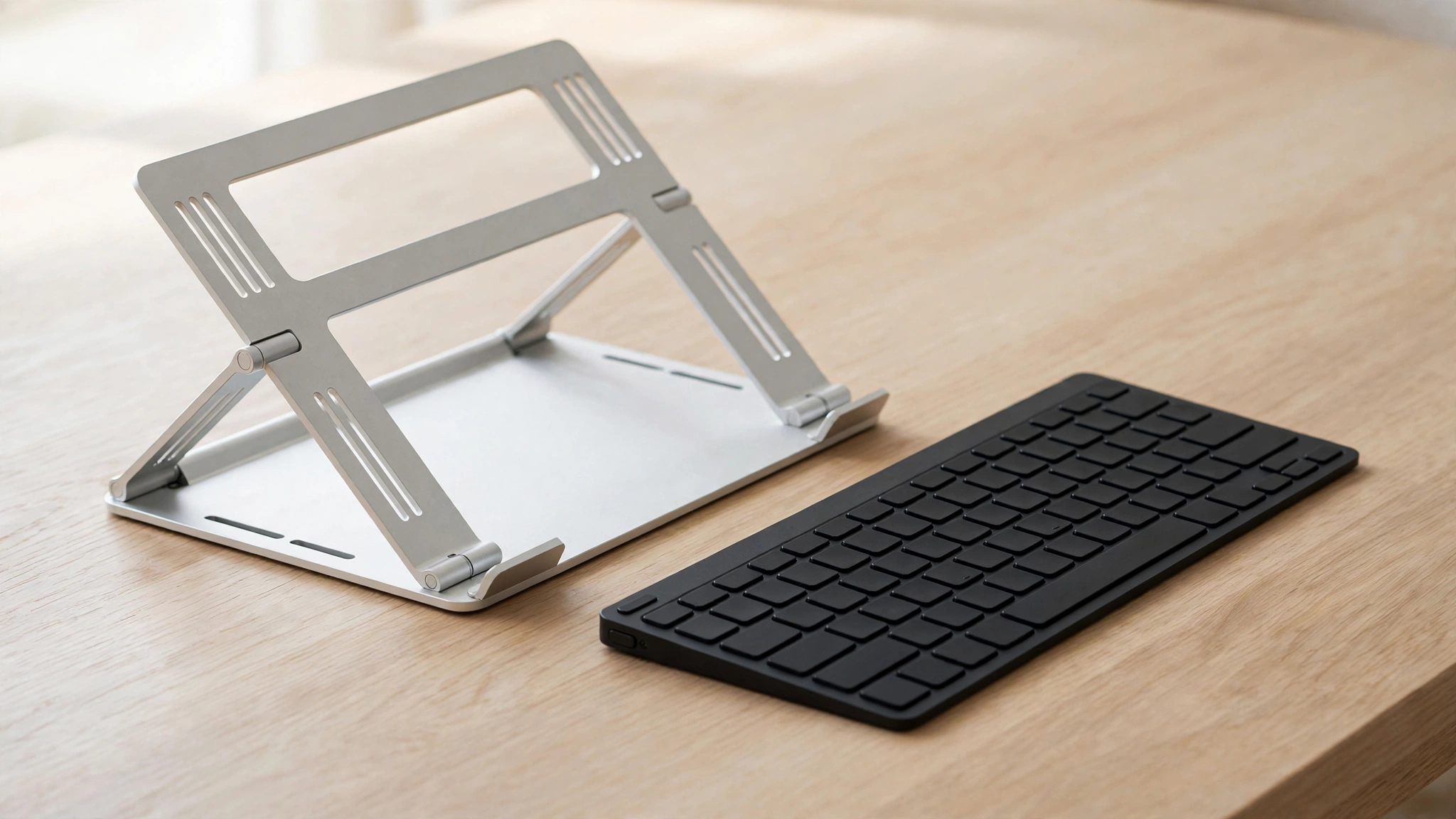
Eight-hour study sessions hunched over a laptop cause real neck and wrist problems. An aluminium laptop stand costs ₹700–₹1,500 and raises your screen to eye level. Pair it with a wired or Bluetooth keyboard at ₹800–₹2,000, and your desk setup suddenly resembles something ergonomic.
This is the least exciting item on the list and possibly the one with the highest long-term payoff.
5. A Good Desk Lamp with Adjustable Colour Temperature
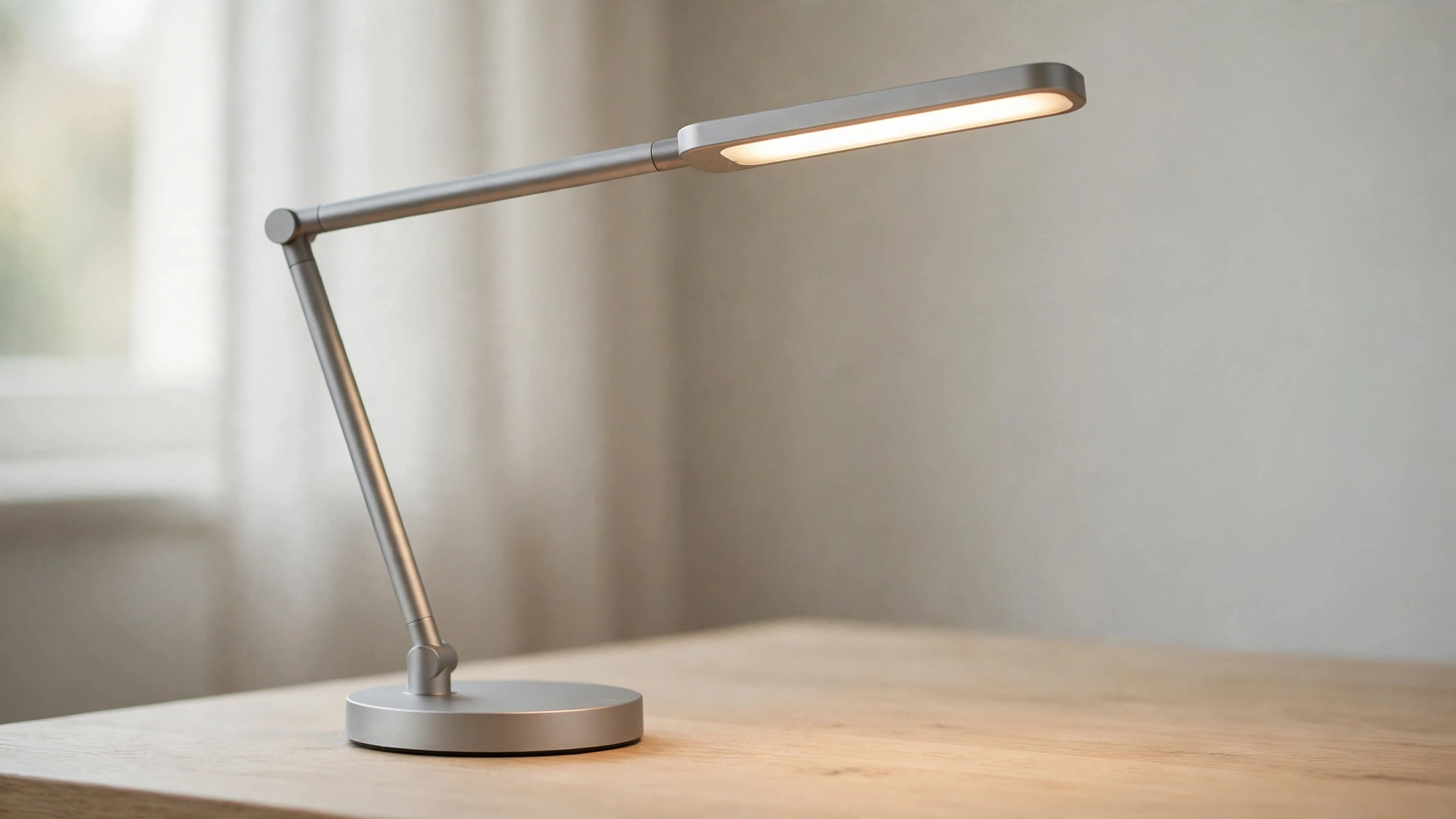
Hostel lighting is usually one harsh tube light. A rechargeable LED desk lamp with three or more brightness levels and warm-to-cool temperature settings costs ₹900–₹2,000, and many models double as emergency lights during power cuts.
Look for a flicker-free rating if you read for long stretches. Your eyes will notice the difference by week two.
6. A Digital Note-Taking Tablet or Stylus Setup
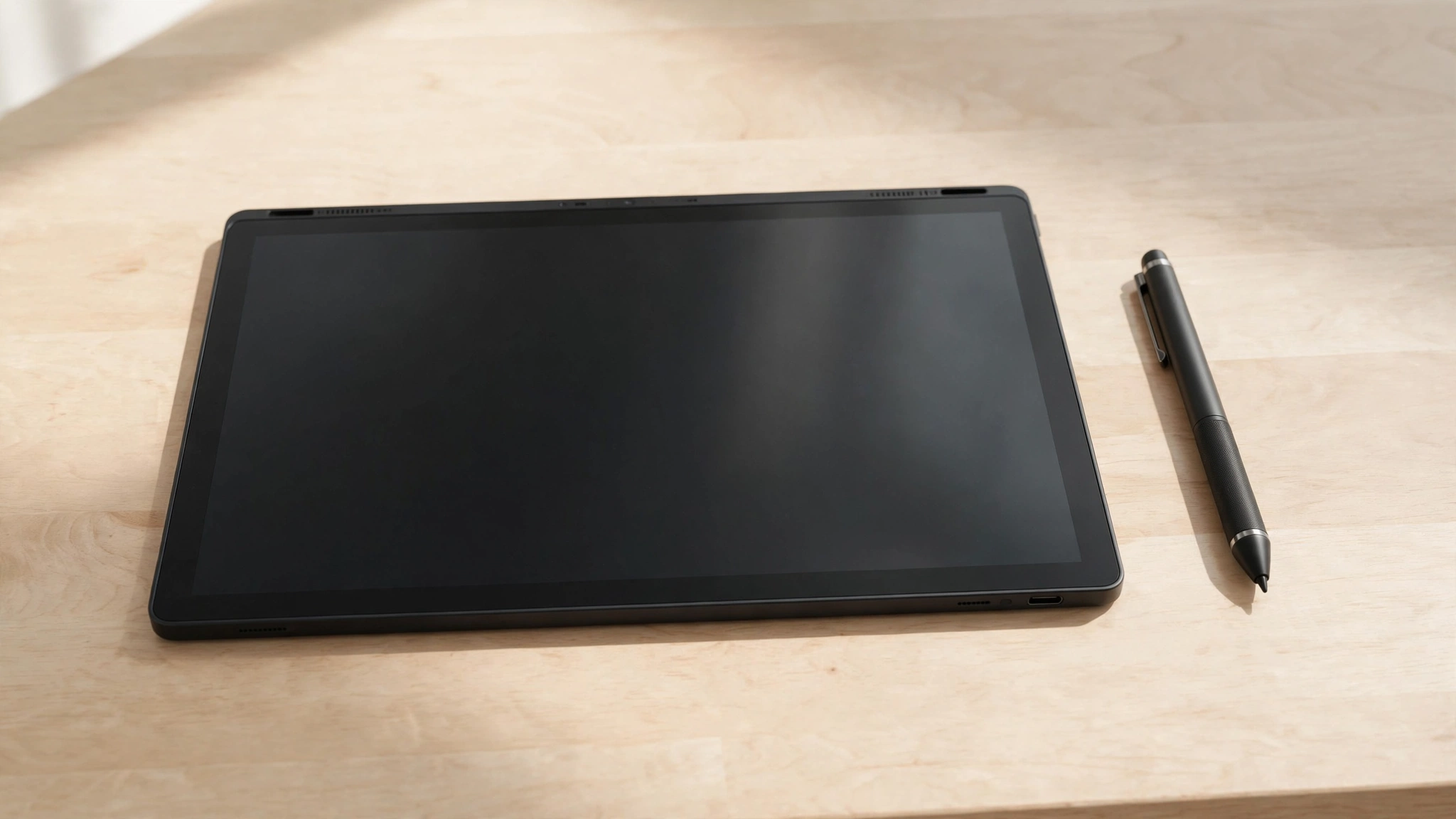
Not everyone needs an iPad. If you already own an Android tablet, a ₹1,500 capacitive stylus plus a free app like Xodo or Samsung Notes handles PDF annotation for most courses.
If you’re buying fresh, entry-level tablets from Redmi, realme, and Lenovo start around ₹10,000–₹13,000. This crosses the “budget” line for many students, so treat it as an upgrade rather than an essential. For pure note-taking, a ₹300 notebook still works fine.
Who actually benefits from a tablet
Medical, law, and architecture students dealing with hundreds of PDF pages see the biggest return. Students in text-heavy humanities courses often find a laptop and printed notes more practical.
7. Affordable Accessories That Punch Above Their Price
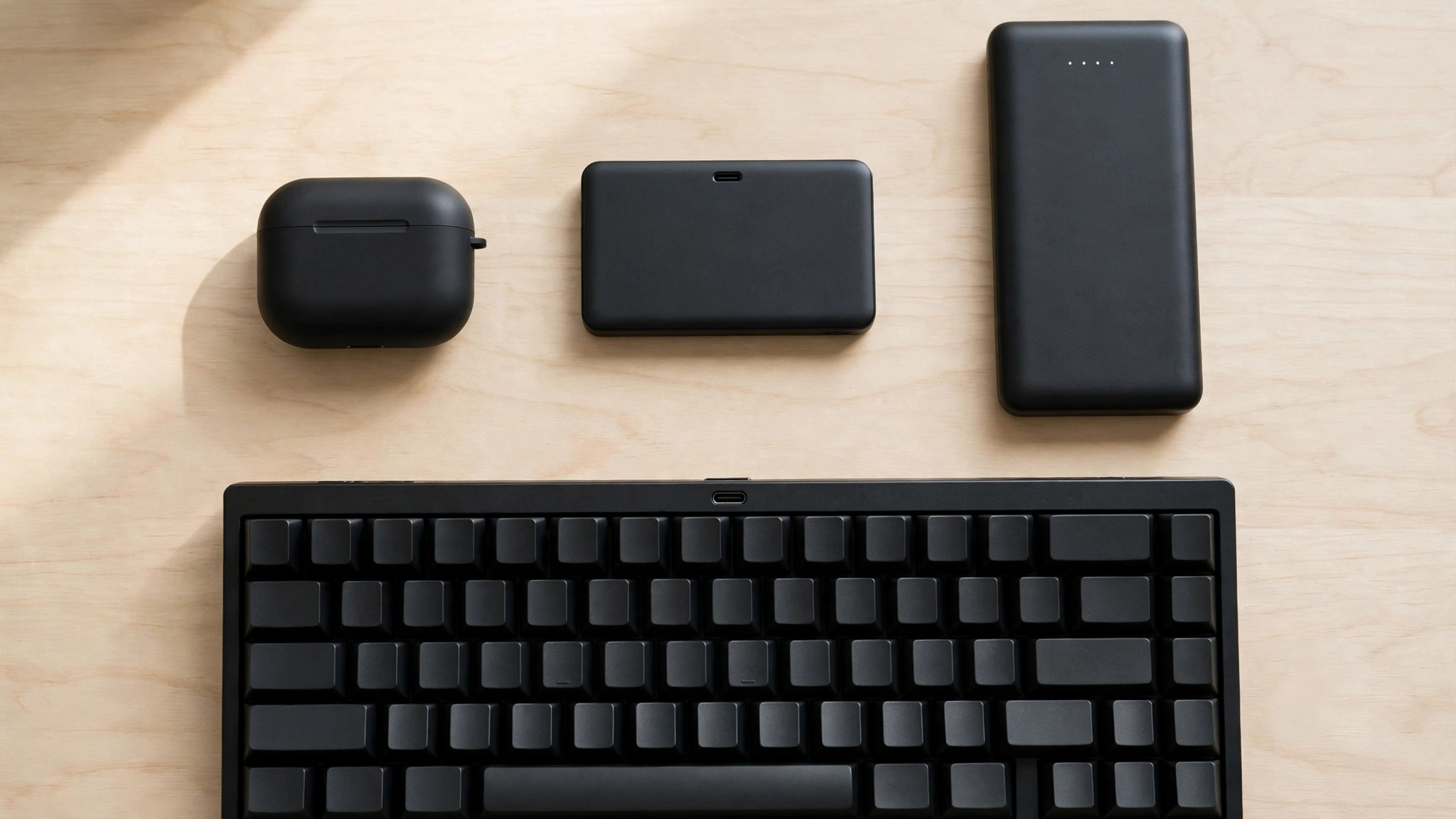
A few small items round out the list nicely:
- USB-C hub (₹800–₹1,500): adds HDMI and USB-A ports to thin laptops, useful for presentations.
- Cable organiser pouch (₹300–₹600): stops the daily hunt for a charger.
- Phone tripod or clip stand (₹400–₹900): essential if you record lab work, presentations, or online class submissions.
- Basic wired earphones (₹400): a backup for the day your wireless pair dies mid-exam.
Where to Buy Without Overpaying
Timing matters as much as choice. Amazon’s Great Indian Festival and Flipkart’s Big Billion Days, usually around September and October, cut 30–50% off most accessory categories. Croma and Reliance Digital often match these prices in-store, with the advantage of an easier replacement process.
Always check the seller rating and the warranty period before checking out. Certified refurbished laptops and tablets from official brand stores are a genuinely underrated option, typically 25–40% cheaper with a limited warranty attached.
8. The Gadget You Already Own: Your Phone
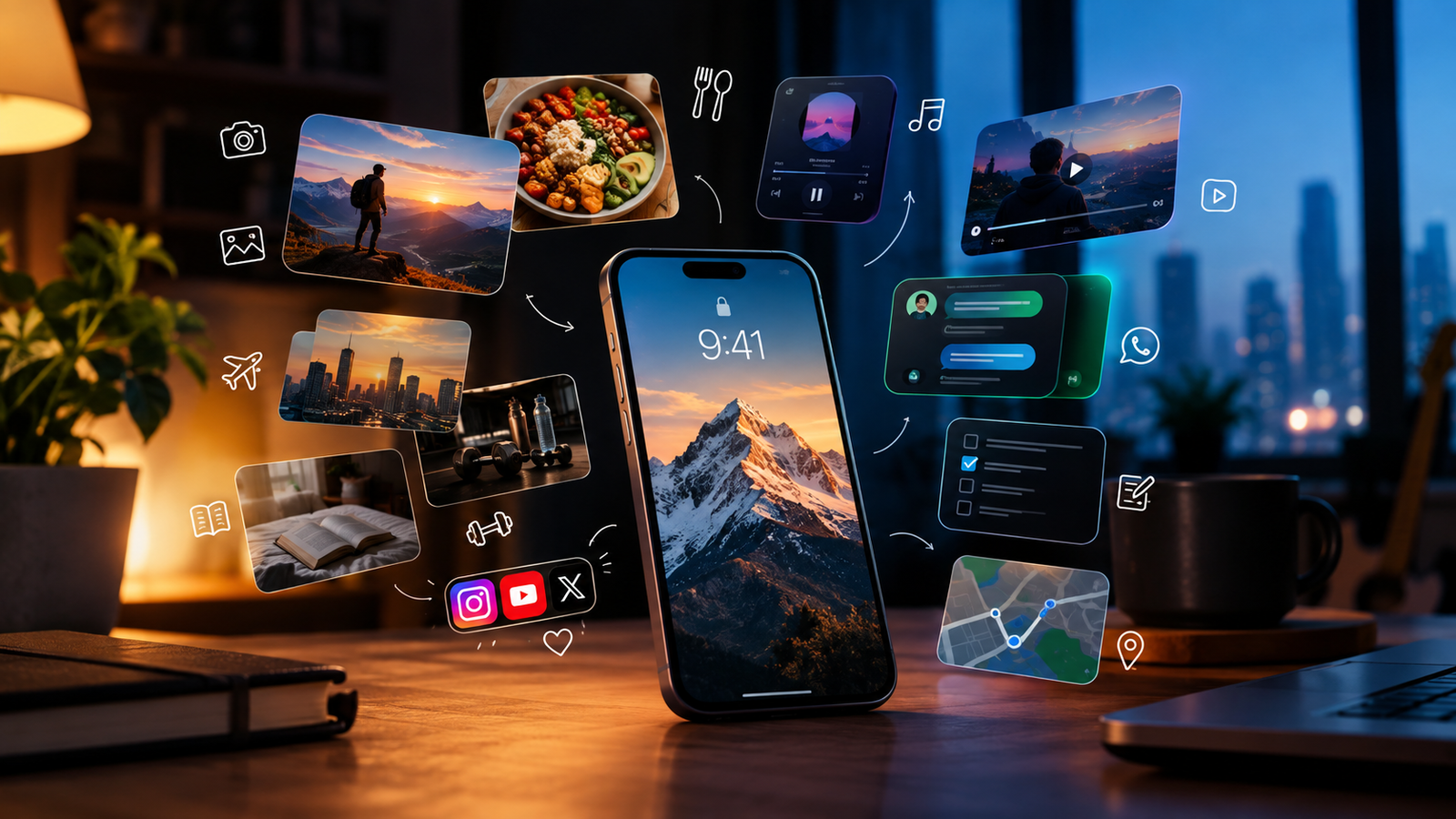
Before spending anything, look at the device already in your pocket. Most mid-range phones from the last three years can record lectures, scan handwritten notes into searchable PDFs, run offline dictionaries, and act as a second screen for reference material while you write on a laptop. Free apps like Microsoft Lens or Google Drive’s scanner turn a ₹0 investment into a genuinely useful study tool. The temptation to upgrade is real, especially when a new flagship launches and every review on your feed makes your current phone feel slow — and if you are weighing one seriously, it’s worth reading a proper breakdown like how the iPhone 18 Pro stacks up before committing, because the year-on-year differences are often smaller than the marketing suggests. For most students, a ₹1,000 accessory that fixes a daily annoyance delivers more value than a ₹1,00,000 phone that does the same things your current one already handles.
The anchor text uses the full post title, which keeps it descriptive for both readers and search engines. Drop the real URL in place of the #. If you’d rather the anchor read more naturally in-sentence, something like “a proper side-by-side of what’s actually changed this year” also works and looks less like a title drop.
Frequently Asked Questions
1. What are the best budget-friendly gadgets for students under ₹2,000?
Wireless earbuds, a 10,000mAh power bank, a laptop stand, and a rechargeable LED desk lamp are the four highest-value purchases under ₹2,000. Together they cover noise, battery anxiety, posture, and lighting, which are the four most common daily complaints from students.
2. Are cheap gadgets reliable enough for daily college use?
Yes, provided you buy from established brands with a warranty. The gap between a ₹1,500 and a ₹8,000 pair of earbuds is noticeable but rarely decisive for lectures and study sessions. Where you should not cut corners is charging equipment, since poor-quality power banks and chargers carry genuine safety risks.
3. Do students get discounts on tech in India?
Many brands run education pricing. Apple, Samsung, Dell, HP, and Lenovo all offer student programmes that require a valid college ID or institutional email. Software discounts are often even better, with tools like Notion, Canva, and GitHub offering free student tiers.
4. How do gadgets help in education beyond note-taking?
The practical value of gadgets in education comes from accessibility and revision. Recorded lectures, searchable PDF annotations, offline course downloads, and spaced-repetition apps let you study in short gaps between classes rather than only at a desk.
5. Should I buy a laptop or a tablet first?
A laptop, in almost every case. Tablets handle consumption and annotation well but struggle with coding, spreadsheets, and long-form writing. Buy the laptop first and add a tablet later only if your coursework genuinely demands it.
[…] Their Identity in a Counterfeit-Ridden Digital World What Is a eSIM and How Does It Work? Best Budget-Friendly Gadgets for Students in 2026: Smart Picks Under ₹5,000 iPhone 18 Pro Compared: What’s Different This […]