

I still remember the exact spreadsheet. Twelve tabs, half of them broken formulas, trying to figure out whether a small consulting business I was helping value was actually worth what the owner thought it was. We had revenue numbers. We had a gut feeling. What we didn’t have was a repeatable way to turn one into the other. That gap — between “here’s some data” and “here’s a decision you can defend” — is exactly where most business owners get stuck. And it’s exactly where AI for business, done right, actually earns its keep.
If you’ve landed here searching for droven.io AI for business content, you’re probably not looking for another glossy list of “10 AI tools to try in 2026.” You want something closer to what I was missing at that spreadsheet: a way to think clearly about improvement, evaluation, trust, and growth, using AI as a tool rather than a magic wand. That’s what this piece is for.
By the end, you’ll understand what AI for business actually means in practice, which business improvement techniques hold up under real conditions, a concrete method for mapping revenue ranges to scores when evaluating a business, why business trust is becoming the hardest thing to fake (and the most valuable thing to build), and what serious business building looks like when AI is part of the toolkit instead of the whole strategy.
What "AI for Business" Actually Means (Once You Strip Away the Hype)
AI for business gets thrown around so loosely that it’s lost most of its meaning. For some people it means a chatbot on their website. For others it means an algorithm quietly re-pricing airline seats. Both are technically correct, which is part of the problem — the phrase is too big to be useful until you narrow it down.
Here’s the narrower, more honest version: AI for business is the use of pattern-recognition software to do three things faster or more consistently than a human alone — sort information, predict outcomes, and flag anomalies. That’s it. It doesn’t run your company. It doesn’t understand your customers the way a decade of relationships does. It compresses time on specific, bounded tasks.
Where AI Actually Pulls Its Weight
In practice, the businesses getting real value out of AI tend to concentrate it in a handful of areas:
- Customer support triage — sorting incoming messages by urgency and topic before a human ever reads them
- Demand and cash-flow forecasting — spotting seasonal patterns in sales data that a monthly spreadsheet review would miss
- Document and contract review — flagging unusual clauses or missing fields for a human to actually decide on
- Lead scoring — ranking which inbound inquiries are worth a callback today versus next week
Notice what’s missing from that list: strategy, culture, pricing philosophy, and anything involving judgment about people. That’s not a limitation to apologize for — it’s the boundary that keeps AI useful instead of dangerous to your business.
Why the Timing Question Matters More Than the Tool Question
The question I get asked most isn’t “which AI tool should I use” — it’s “is it too early or too late for my business to bother.” Neither, usually. The businesses that get burned are the ones that adopt AI everywhere at once, hoping it fixes a strategy problem. The businesses that benefit are the ones that pick one repetitive, data-heavy bottleneck, automate that specific thing, and measure whether it actually saved time or improved accuracy before expanding further.
What Are Business Improvement Techniques, Really? (Beyond the Textbook Definitions)
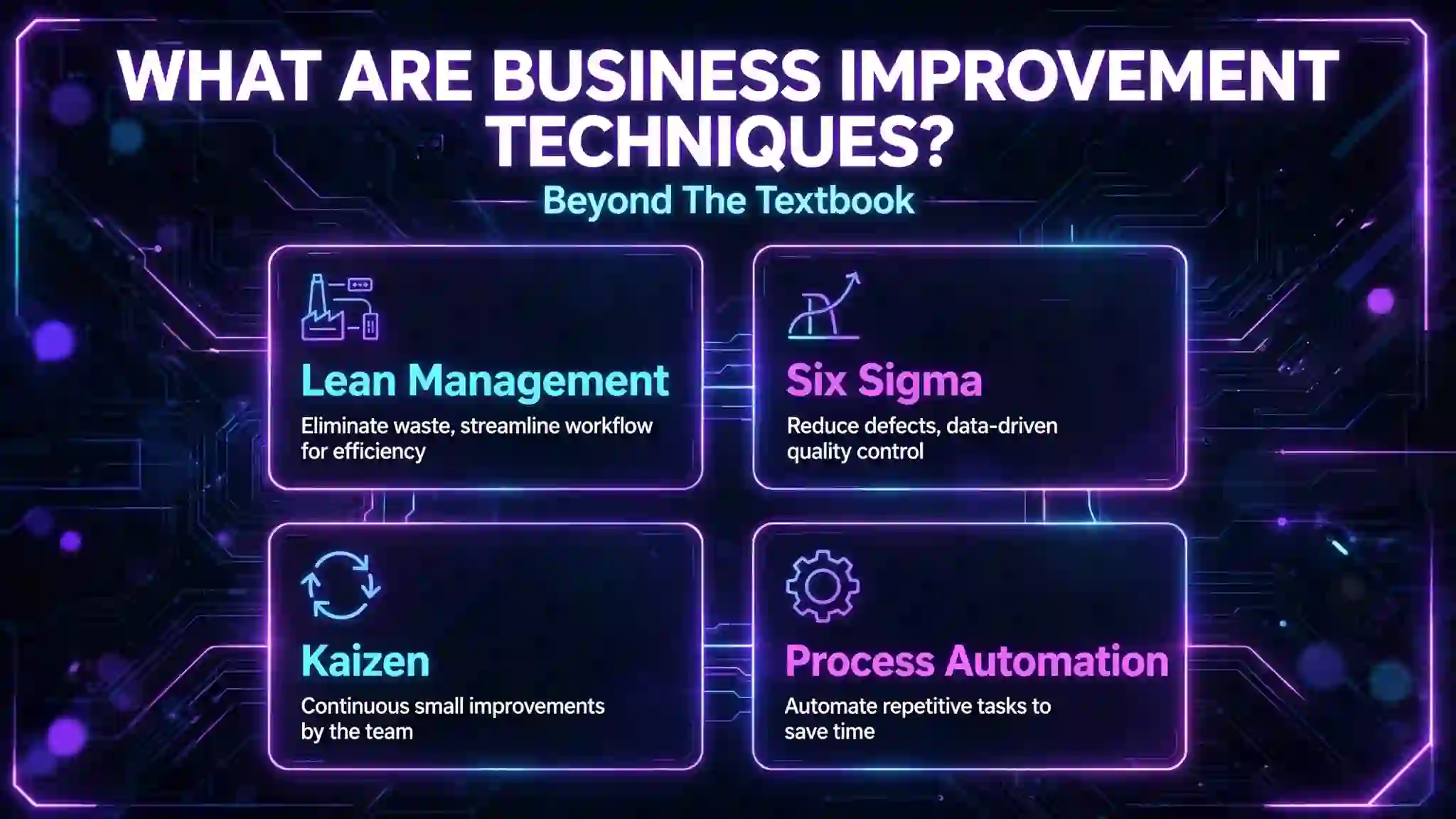
This is the question that quietly sits underneath almost every “how do I grow my business” search, and it deserves a straight answer instead of a management-consulting word salad.
Business improvement techniques are structured methods for finding waste, inconsistency, or missed opportunity in how a business operates — and then closing that gap deliberately, rather than hoping it fixes itself. The word “structured” is doing a lot of work in that sentence. Improvement that isn’t structured is just reacting to whatever went wrong last week.
The Techniques That Actually Survive Contact With a Real Business
Process mapping before automation. Before you touch a tool, write down — literally on paper or a whiteboard — every step a task takes from start to finish, including the annoying manual ones nobody talks about. Most owners discover the real bottleneck is a step they’d forgotten existed, not the one they assumed was slow.
The 80/20 review. Once a quarter, look at which 20% of your products, clients, or channels generate 80% of your profit — not revenue, profit. This single exercise reshapes more strategies than any AI dashboard, because it forces an honest look at what’s actually working.
Small-batch testing. Instead of overhauling your pricing, your onboarding, or your marketing all at once, change one variable, run it for a defined period, and measure the result before rolling it out further. This is the technique AI tools have genuinely made faster — a forecasting model can show you the likely impact of a price change in seconds instead of a full sales cycle.
Feedback loop shortening. The businesses that improve fastest are the ones where the person closest to a problem can flag it and see a change within days, not quarters. This is more of a management discipline than a tool, but AI-powered ticketing and sentiment analysis can shrink the time between “customer complained” and “team saw the pattern.”
Constraint identification (Theory of Constraints, simplified). Every business has exactly one bottleneck limiting its overall output at any given time — not five, one. Improvement efforts that don’t target that specific constraint usually just create slack somewhere that wasn’t actually holding you back.
None of these require AI. All of them get sharper and faster with it. That distinction — technique first, tool second — is the one most “AI for business” content skips entirely.
(If you’re running lean and wondering what’s actually worth spending on versus what you can do with what you already own, it’s worth a look at Best Budget-Friendly Gadgets for Students in 2026 — a lot of the same “spend smart, not much” logic applies whether you’re outfitting a dorm room or a two-person startup.)
How to Map Revenue Ranges to Scores for Business Evaluation
This is the part almost nobody explains clearly, and it’s the part that actually decides real outcomes — loan applications, investor conversations, acquisition offers, even internal decisions about which product line deserves more budget. If you’ve ever been handed a “business health score” and had no idea what produced it, this section is for you.
Why You'd Score a Business by Revenue Range in the First Place
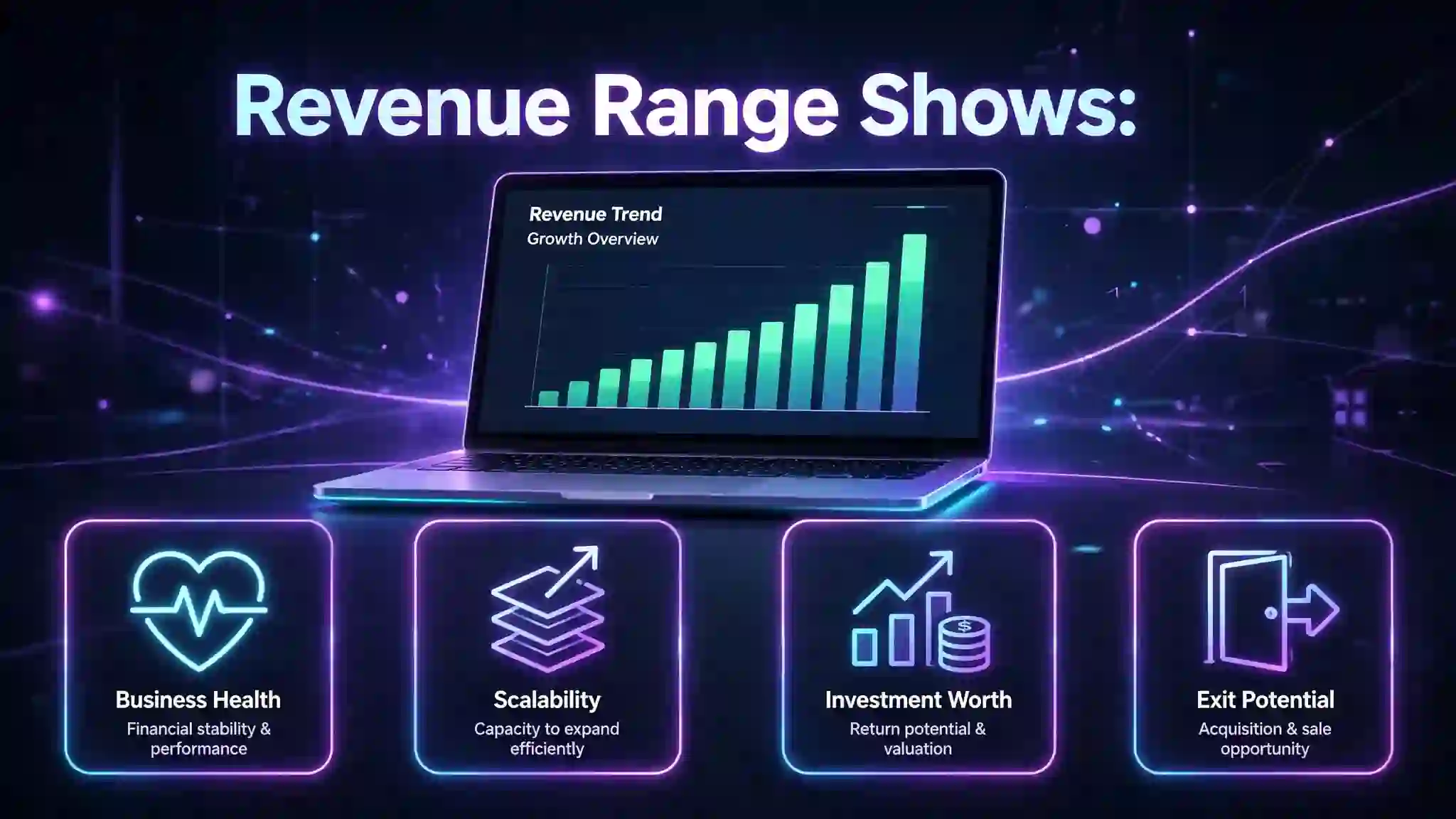
Raw revenue numbers are hard to compare across businesses of different sizes. A business bringing in $80,000 a year and one bringing in $8 million aren’t just different in scale — they behave differently, get evaluated by different standards, and carry different risk profiles. Mapping revenue into ranges, then converting those ranges into a score, lets you compare businesses (or compare the same business over time) on a consistent, defensible scale instead of an intuitive one.
The Basic Method, Step by Step
Step 1 — Define your revenue bands. Start by segmenting revenue into meaningful tiers based on your industry and purpose. A common structure for small-to-mid businesses looks like this:
| Annual Revenue Range | Score Assigned |
|---|---|
| Under $50,000 | 1 |
| $50,000 – $250,000 | 2 |
| $250,000 – $1,000,000 | 3 |
| $1,000,000 – $5,000,000 | 4 |
| $5,000,000 – $20,000,000 | 5 |
| Above $20,000,000 | 6 |
The exact cutoffs should shift depending on context — a lending model, an investor screening tool, and an internal KPI dashboard will each draw the lines differently. What matters is that the bands are wide enough to be meaningful but narrow enough to actually differentiate businesses.
Step 2 — Decide whether the scale is linear or weighted. A linear scale (each band worth one more point than the last) is simple but can understate how much harder it is to go from $5M to $20M than from $50K to $250K. Many evaluation models use a weighted or logarithmic scale instead, so the score reflects difficulty of growth, not just raw dollar movement.
Step 3 — Normalize against context, not just the number. This is the step people skip, and it’s the one that separates a lazy score from a useful one. A $2 million business with 40% margins and three years of consistent growth is not the same “3” as a $2 million business that’s flat, thin-margin, and dependent on one client. Serious evaluation frameworks adjust the raw revenue score up or down based on:
- Revenue consistency (year-over-year variance)
- Customer concentration (percentage from a single client)
- Margin quality, not just top-line size
- Growth trajectory over the last 12–24 months
Step 4 — Combine the revenue score with other weighted factors. In most real evaluation models, revenue is one input among several — often 25–40% of a total score, alongside profitability, market position, operational risk, and management depth. A business scoring a 5 on revenue but a 1 on customer concentration isn’t a 5 overall; it’s a red flag wearing a good number.
Step 5 — Document the methodology, every time. The single biggest mistake in business evaluation is producing a score without writing down exactly how it was calculated. Six months later, nobody — including you — will remember why a business scored a 4 instead of a 5, and the number becomes useless for comparison.
A Quick Real-World Example
Back to that twelve-tab spreadsheet I mentioned. The consulting business had $340,000 in annual revenue — landing it in the “3” band on the table above. But 70% of that revenue came from a single retained client. Once we factored in concentration risk, the effective evaluation score dropped to closer to a 2, which completely changed the conversation the owner had with a potential buyer six months later. The raw revenue number told a nicer story than the adjusted score did — and the adjusted score was the one that held up under scrutiny.
Business Trust: The One Thing AI Can Help You Signal, But Never Manufacture

Here’s an uncomfortable truth: the more AI touches a business — its marketing copy, its customer replies, its reviews, even its “About Us” page — the more customers quietly start discounting everything that business says. Business trust used to be built through consistency over time. Now it has to survive a much higher level of skepticism, because people have gotten good at spotting generic, machine-smoothed language and generic, machine-smoothed promises.
Why Trust Has Gotten Harder to Earn, Not Easier
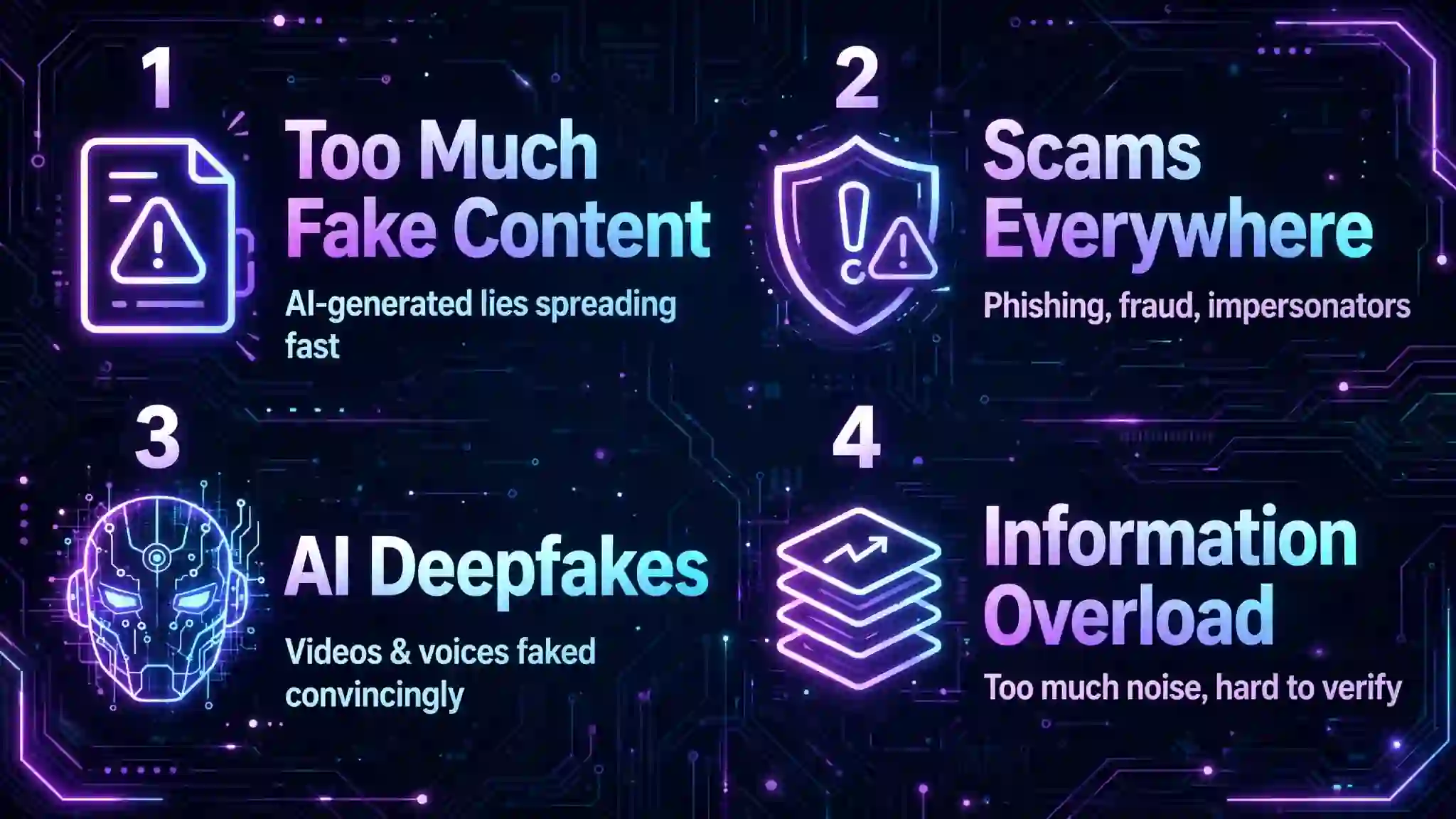
Trust isn’t just about honesty anymore — it’s about detectability. A perfectly polished, jargon-free, benefit-stacked piece of marketing copy used to read as “professional.” Increasingly, it reads as “probably written by a tool, probably says the same thing to everyone.” Customers aren’t wrong to notice — and businesses that lean entirely on AI-generated content, AI-generated reviews responses, or AI-run customer service without a visible human safety net are trading short-term efficiency for long-term credibility.
What Actually Builds Business Trust in an AI-Saturated Market
Specificity over polish. A testimonial that mentions a specific number, a specific timeline, or a specific person’s name reads as more trustworthy than a beautifully written but vague one — because specificity is expensive to fake and easy to verify.
Visible accountability. Businesses that clearly show who’s behind a decision — a named person responding to a complaint, a real phone number, a real return policy with no asterisks — earn disproportionate trust simply because so few competitors bother anymore.
Consistency between the AI-assisted parts and the human parts. If your chatbot promises something your support team can’t actually deliver, trust doesn’t erode slowly — it collapses immediately, and customers tell other customers.
Transparency about where AI is being used. Oddly, businesses that openly say “this initial response was AI-assisted, a person will follow up” often build more trust than ones that quietly hide it, because the disclosure itself signals that the business has nothing to hide.
Business trust was never really about perfection. It was always about predictability — customers trusting that what happens next will match what was promised. AI can help you be more consistent at scale. It cannot manufacture the underlying honesty that consistency is supposed to reflect.
Business Building in the AI Era: What Actually Changes, and What Doesn't
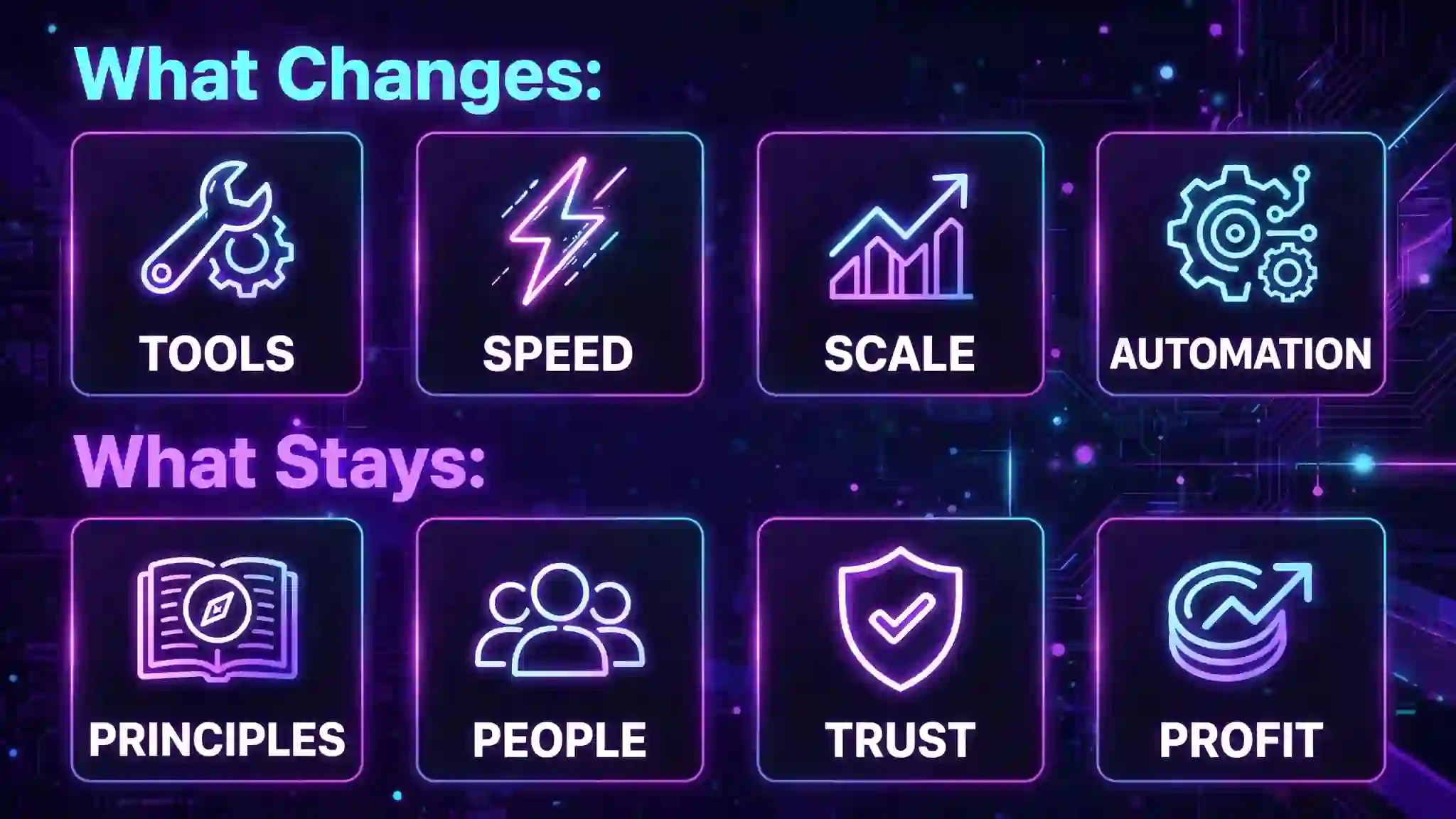
Business building — the actual, unglamorous process of turning an idea into something that survives contact with real customers, real cash flow, and real competitors — hasn’t fundamentally changed. What’s changed is which parts of it are now faster, and which parts have quietly become more important because everything else sped up.
What AI Has Genuinely Compressed
Market research that used to take weeks of manual surveying can now be partially automated through sentiment analysis on existing reviews and forum discussions. Financial modeling that used to require a specialist can now be roughed out by a founder in an afternoon, then refined by that specialist. Early customer support, before you can afford a full team, can be handled by an AI layer that at least keeps response times reasonable.
What AI Has Not Touched, and Probably Won’t
The decision about what problem is actually worth solving. The judgment call about which early customer feedback to listen to and which to ignore. The relationship-building that turns a first-time buyer into a five-year client. The resilience required to keep going through a bad quarter. None of these compress, no matter how good the tooling gets, because they’re not information-processing problems — they’re human ones.
A Practical Sequence for Building With AI as a Tool, Not a Crutch
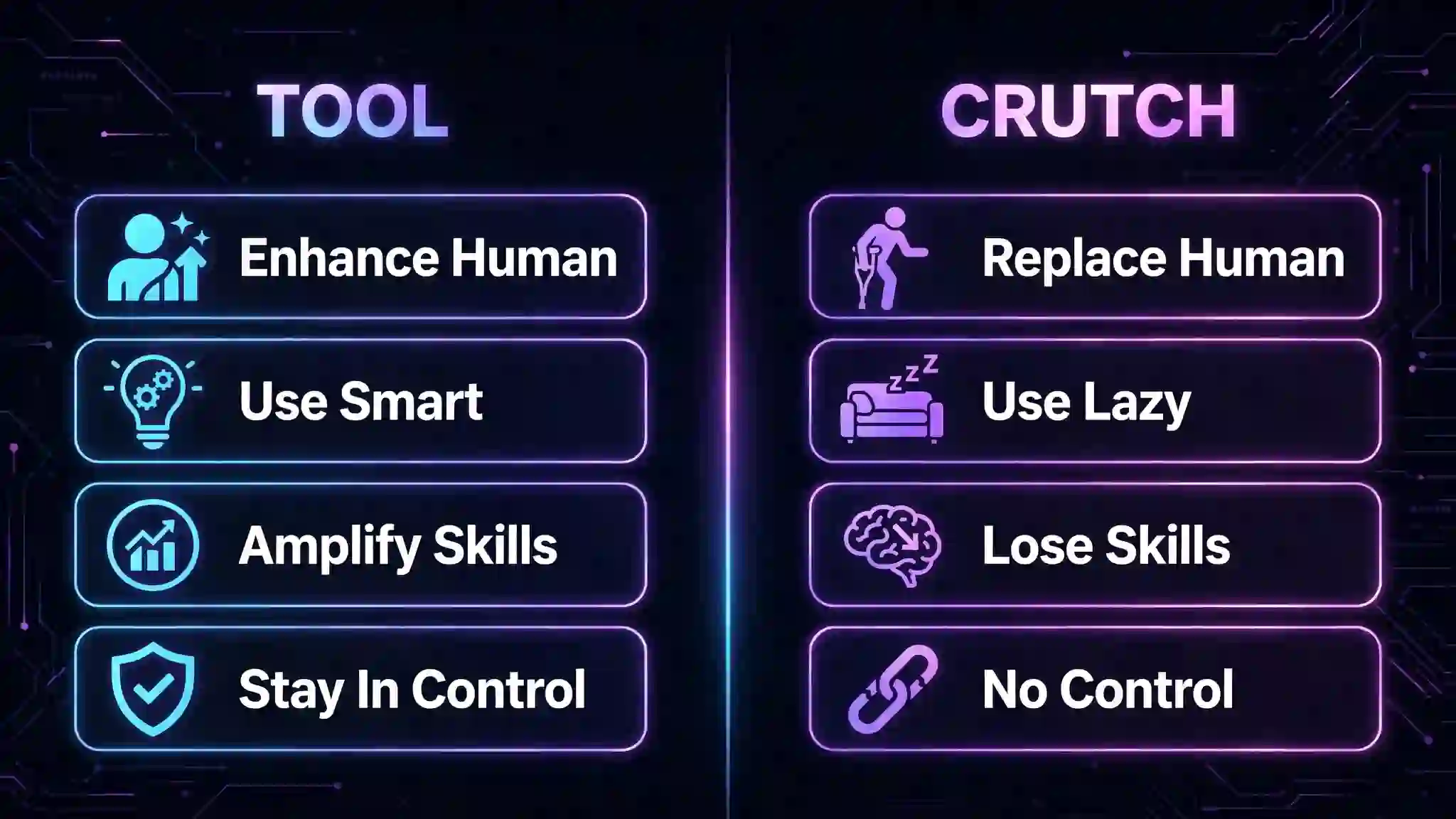
- Validate the problem manually first. Talk to ten real potential customers before you automate anything. AI can help you analyze what they said; it shouldn’t replace the conversation itself.
- Automate the first repetitive bottleneck you hit, not every process you can imagine automating. This is usually customer inquiries or basic bookkeeping.
- Use AI-assisted forecasting to pressure-test your assumptions, not to replace your plan. If a forecasting tool shows your growth assumption is wildly optimistic, that’s useful friction, not a reason to ignore the tool.
- Reinvest saved time into relationship-building, not into more automation. The time AI buys you is only valuable if you spend it on something AI can’t do — a customer call, a partnership conversation, a genuinely improved product decision.
- Revisit your evaluation score (using the revenue-mapping method above) every 6–12 months, so you’re tracking real business health, not just revenue growth in isolation.
Business building has always rewarded patience more than speed. AI changes the speed of individual tasks. It doesn’t change that underlying truth.
Bringing It Together: A 90-Day Starting Point
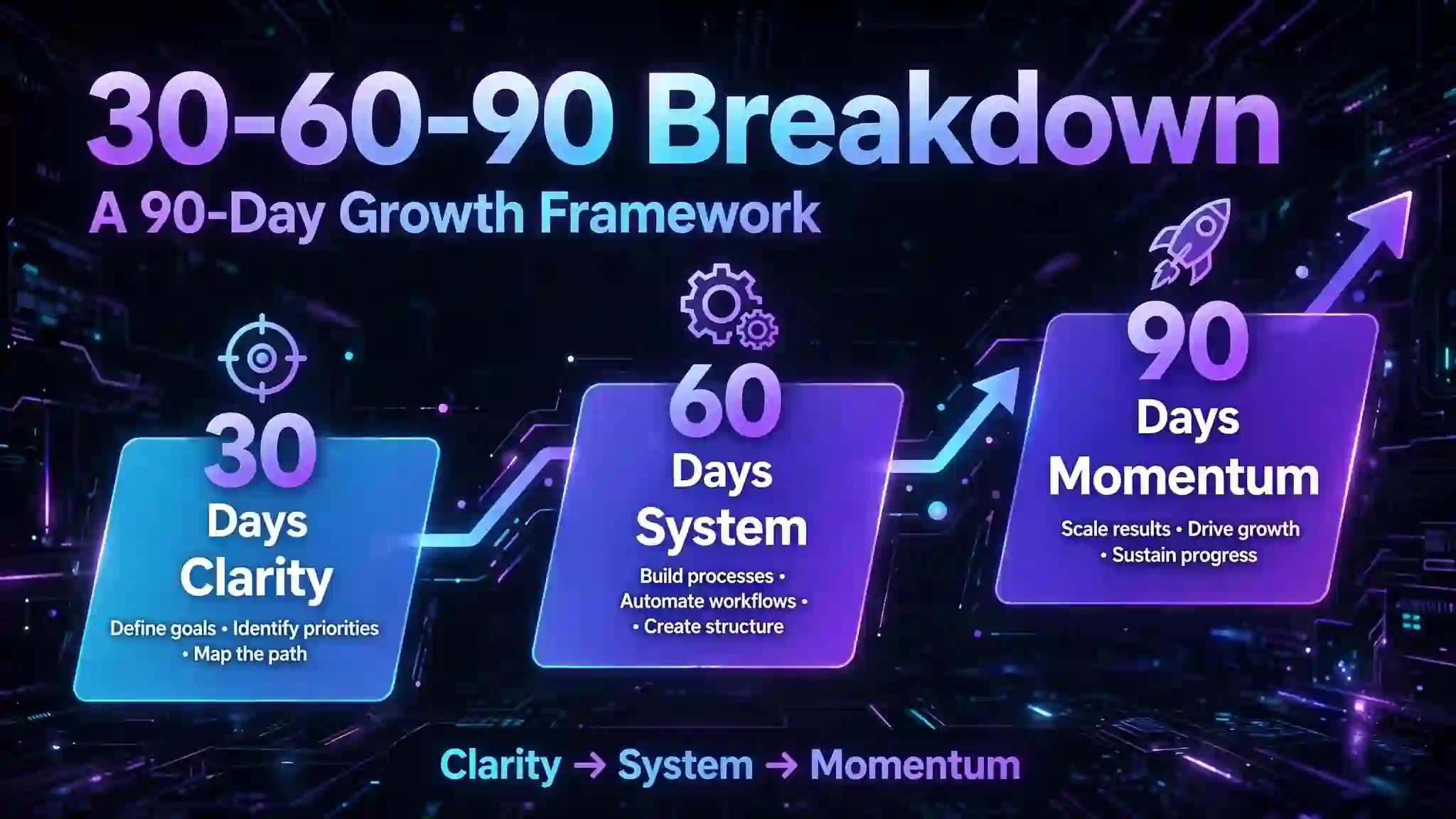
If all of this feels like a lot to absorb at once, here’s the condensed version, sequenced over three months:
- Days 1–30: Process-map your single biggest bottleneck. Don’t automate yet — just document it honestly.
- Days 31–60: Automate that one bottleneck with the simplest available AI tool. Measure the actual time or accuracy improvement, not the theoretical one.
- Days 61–90: Run your business through the revenue-to-score evaluation method above, adjusted for concentration risk and margin quality. Use that score as your honest baseline, and revisit it in six months to see whether the improvement actually moved the number — not just the mood in the room.
Frequently Asked Questions
No. Droven.io functions as an independent content and knowledge platform publishing articles on AI, business, and technology topics — not a piece of software you install or subscribe to. If you're looking for AI tools themselves, droven.io-style content is meant to help you understand and compare them, not replace them.
The 80/20 profit review. It costs nothing but an afternoon and a spreadsheet you already have, and it routinely reveals that a meaningful chunk of effort is going toward low-profit work.
Every six to twelve months for most small and mid-sized businesses. Scoring more often than that usually just reacts to short-term noise rather than real trend changes.
Often more easily than expected. Specificity, visible accountability, and honest disclosure cost nothing and scale poorly for large companies — which is exactly why they're a real advantage for smaller ones.
No. The core method is arithmetic and judgment, not statistics. The hard part isn't the math — it's being honest about the adjustments (concentration risk, margin quality) that most people are tempted to skip.