
It’s 9:40 on a Sunday night. A teacher has a Monday lesson on fractions, a blank slide deck, and about forty minutes of energy left. She opens her laptop and types a search she’s typed a hundred times before.
Millions of educators do something like this every week. An online marketplace for teachers has quietly become part of how classrooms run. These platforms are where lessons get bought, sold, swapped, and borrowed.
The conversation around them is usually shallow. You hear about the teacher who made a million dollars, or about “free resources,” and not much in between. Meanwhile, researchers have been studying these platforms for years and have found things that rarely make it into blog posts.
In this guide you’ll learn:
- What an online marketplace for teachers actually is, in one plain sentence
- How large these platforms have become
- Why most teachers shop there, which isn’t the reason you’d guess
- What an expert review found about the quality of what’s for sale
- What sellers really gain, and it isn’t only money
- How to try resources free first, keep a useful teach record, and make shared learning work
Let’s start with the basics.
1. What Is an Online Marketplace for Teachers?

Quick answer: An online marketplace for teachers is a website where educators buy, sell, or share lesson plans, worksheets, slides, and other classroom materials, usually created by other teachers.
That’s the whole idea. Some platforms are paid, some are free, and some mix both. Researchers who study the sellers call them “online teacherpreneurs.” These are current and former P-12 teachers who post digital lesson materials to sites like TeachersPayTeachers.com and earn small amounts each time someone downloads them. editlib
The best-known example is Teachers Pay Teachers (TpT), but it isn’t the only model. Free repositories like ReadWriteThink and Share My Lesson exist too, and those three were compared in a major quality study we’ll get to shortly.
Three types of teacher marketplaces
- Paid marketplaces. Sellers set prices and buyers download files. Quality varies a lot.
- Free sharing libraries. These are often run by nonprofits or unions, with no price tag.
- Hybrid platforms. Many sellers offer a free sample so buyers can judge before spending anything.
That last model matters for the “free first” idea we’ll return to later.
2. How Big Is the Online Marketplace for Teachers Today?
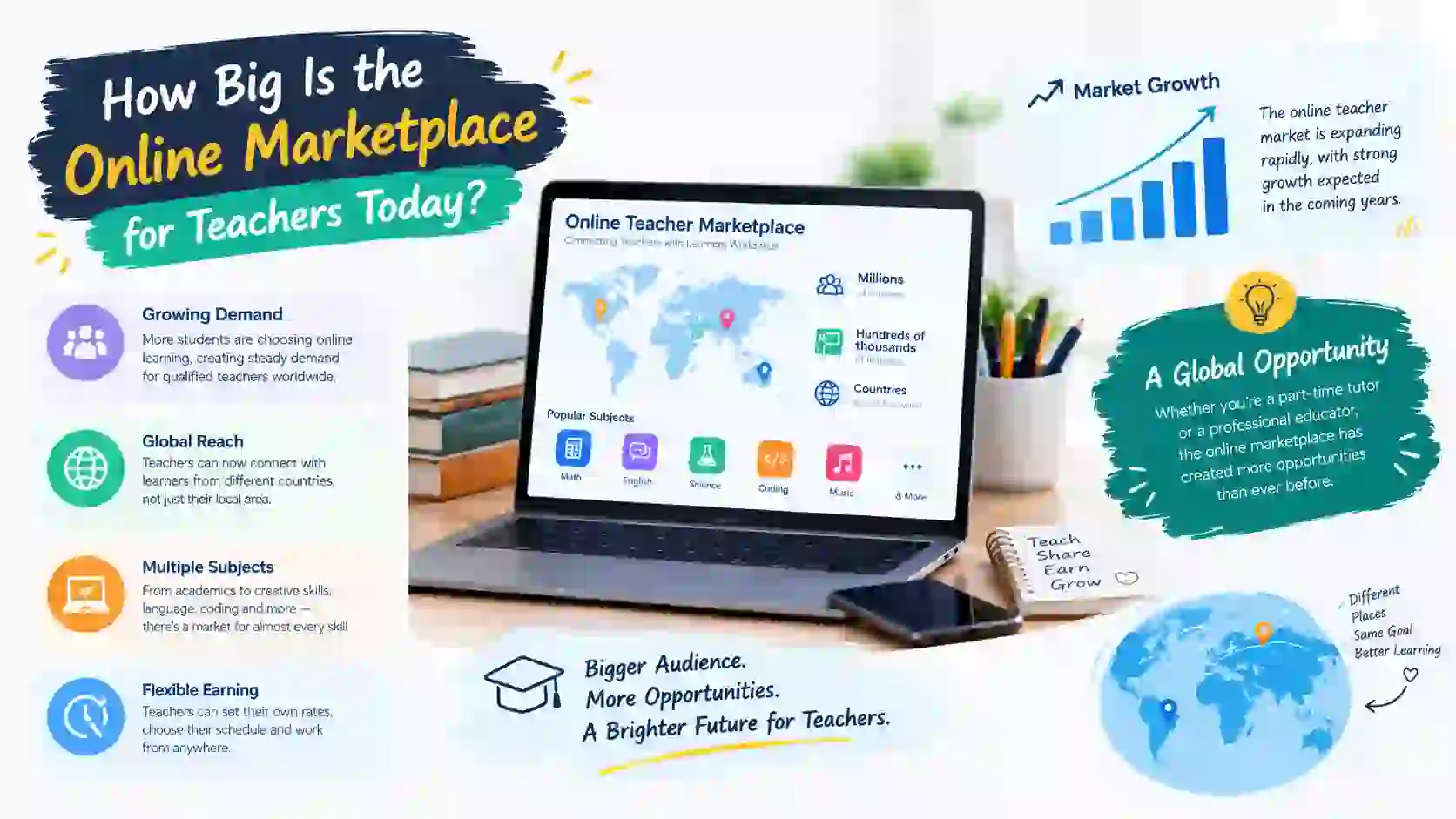
Bigger than most people assume, and it grew from almost nothing.
In 2010, a news report quoted TpT’s founder saying the site had more than 250,000 registered users and sales above $500,000 the previous year. That’s tiny by today’s standards. eschoolnews
By 2015 the picture had changed. Revenues climbed from $45 million to $78 million between 2013 and 2014, with roughly 50,000 teacher-authors selling to about 3 million buyers. edsource
More recently, EdSurge reported that in 2015 there were 12 “millionaire” sellers, while today more than 300 teachers have earned at least $1 million from their online stores. The same article noted that over 185,000 people had made a sale in the previous 12 months. edsurgeedsurge
The part that rarely gets mentioned
Read that again: 185,000 sellers had made a sale, but only about 300 have crossed a million dollars. EdSurge was careful to say that one seller’s life-changing story isn’t representative of a typical seller’s experience. edsurge
So the honest takeaway is this. The marketplace is large and real, but the “teacher millionaire” headline describes a very small slice of it. If you’re thinking about selling, expect a side income that builds slowly, not a windfall.
3. Why Teachers Really Use an Online Marketplace for Teachers
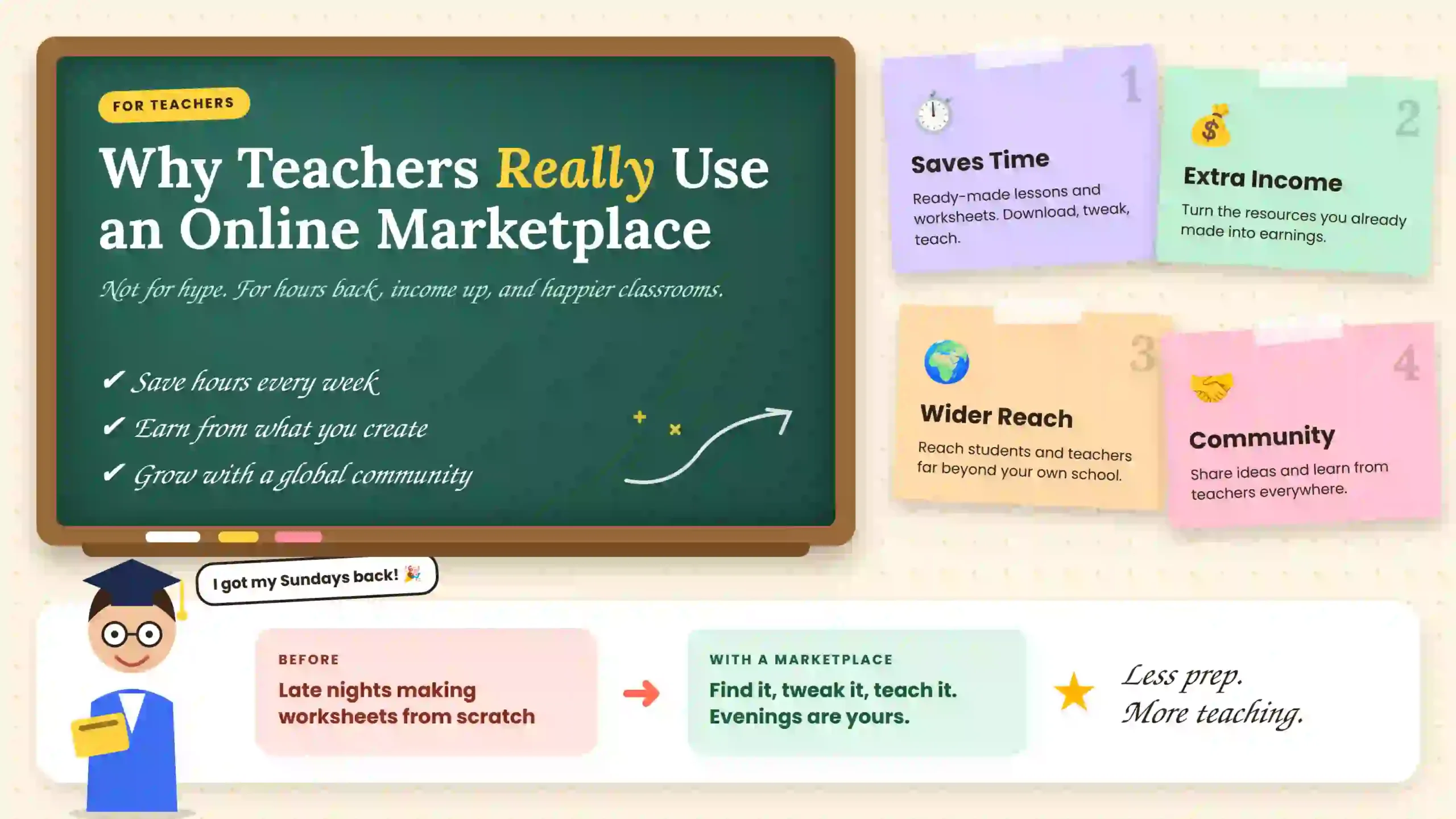
The common assumption is that teachers shop online because they’re lazy or overworked. The data tells a more interesting story.
Teachers already build their own materials
A 2016 RAND Corporation study, as summarized by Education Week, found that 98 percent of secondary math teachers and 96 percent of secondary English teachers were using materials they had developed or selected themselves. edweek
In other words, the typical teacher isn’t relying on a textbook alone. They’re curators and builders, constantly assembling a custom curriculum from many sources.
Where they look
National data from the American Teacher Panel, reported by Education Next, showed that more than 90% of teachers used Google to find lessons, and more than 70% used TeachersPayTeachers and Pinterest. An earlier RAND analysis covering 2015 to 2017 found more than half of math and English teachers used TeachersPayTeachers.com, while a third to a half used Pinterest. educationnextthejournal
Why the demand exists
Researchers Shelton and Carpenter surveyed teachers directly. Of their 1,359 respondents, 78 percent used TpT at least monthly. The study suggested many teachers face gaps in their curriculum resources and want more support from their schools and districts. ascd
Here’s a detail most people miss. Teachers trust each other more than they trust publishers. An Education Week Research Center survey found that teachers were deeply skeptical of traditional publishers’ claims about Common Core alignment, and had much more faith in materials made by fellow teachers. edsource
That’s the real engine behind every online marketplace for teachers. It runs on peer trust.
The time math
One teacher quoted in a Gigazine report said he sometimes spent 20 to 30 hours a month developing teaching materials, and if he could find what he needed on a site like TpT, he could buy that time back for a few dollars. Whether you like it or not, that’s a powerful pitch for a profession short on hours. gigazine
4. The Quality Question Nobody Talks About
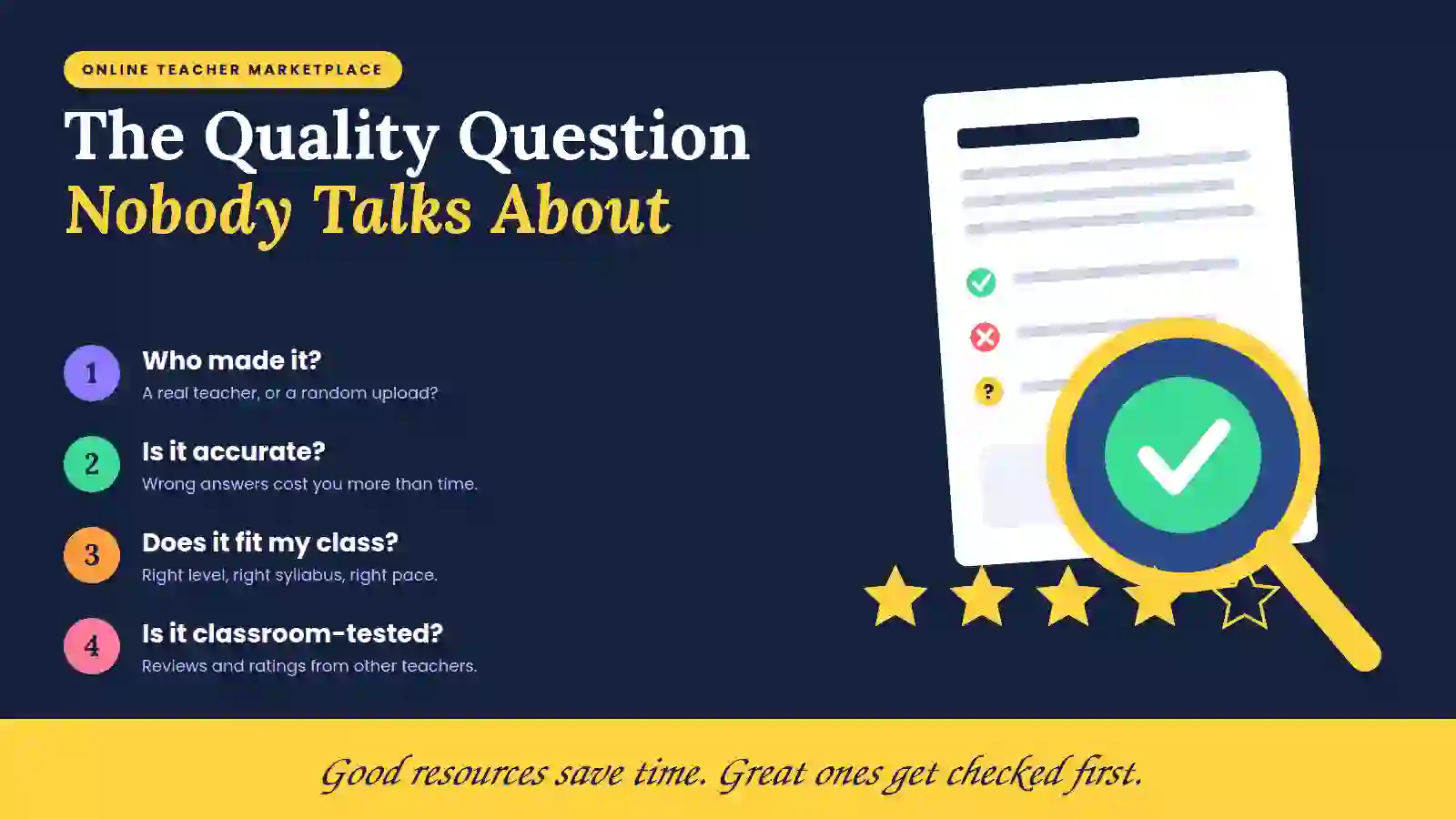
This is the section that surprises most readers.
In December 2019, the Thomas B. Fordham Institute published a study led by USC’s Morgan Polikoff and consultant Jennifer Dean. Reviewers evaluated more than 300 resources from three platforms (ReadWriteThink, Share My Lesson, and Teachers Pay Teachers) for standards alignment and overall quality. edweek
What they found
The news wasn’t all bad. The materials were generally error-free and well organized, and the quality of the texts chosen was rated “excellent.” usc
But the weaknesses were significant:
- The materials were at best only moderately aligned with the standards they claimed to meet. usc
- The materials did a very poor job of supporting teachers who work with diverse learners. givingcompass
- Text quality varied by site, with ReadWriteThink and Share My Lesson scoring higher than Teachers Pay Teachers. edweek
The finding that deserves more attention
The researchers also looked at whether better-rated materials were downloaded more. The result: at best there’s modest evidence that quality predicts teachers’ use of a resource. givingcompass
Think about what that means. Popularity on an online marketplace for teachers is not a reliable signal of quality. A bestseller badge, a pretty thumbnail, or a thousand downloads doesn’t tell you whether the lesson will actually help students.
This isn’t unique to teacher marketplaces. Polikoff’s earlier work found that only 27 to 38 percent of the content in some commercial fourth-grade math textbooks was in perfect proportional agreement with the Common Core. Even traditional, professionally published materials get criticized on alignment. So the lesson isn’t “avoid marketplaces.” It’s “evaluate everything.” thejournal
A quick evaluation checklist you can use in five minutes
- Does the lesson state a clear learning goal, and does every activity connect to it?
- Does it match your state or district standards, not just claim to?
- Are there supports for students who struggle or need a challenge?
- Could you teach it tomorrow without rewriting half of it?
- Is there a free sample or preview so you can judge before paying?
Reviewers in the Fordham study suggested that platforms could do more to vet materials and spotlight the strongest ones. Until that happens widely, the vetting falls to you.
5. Teach Me First Free Online: Try Before You Buy
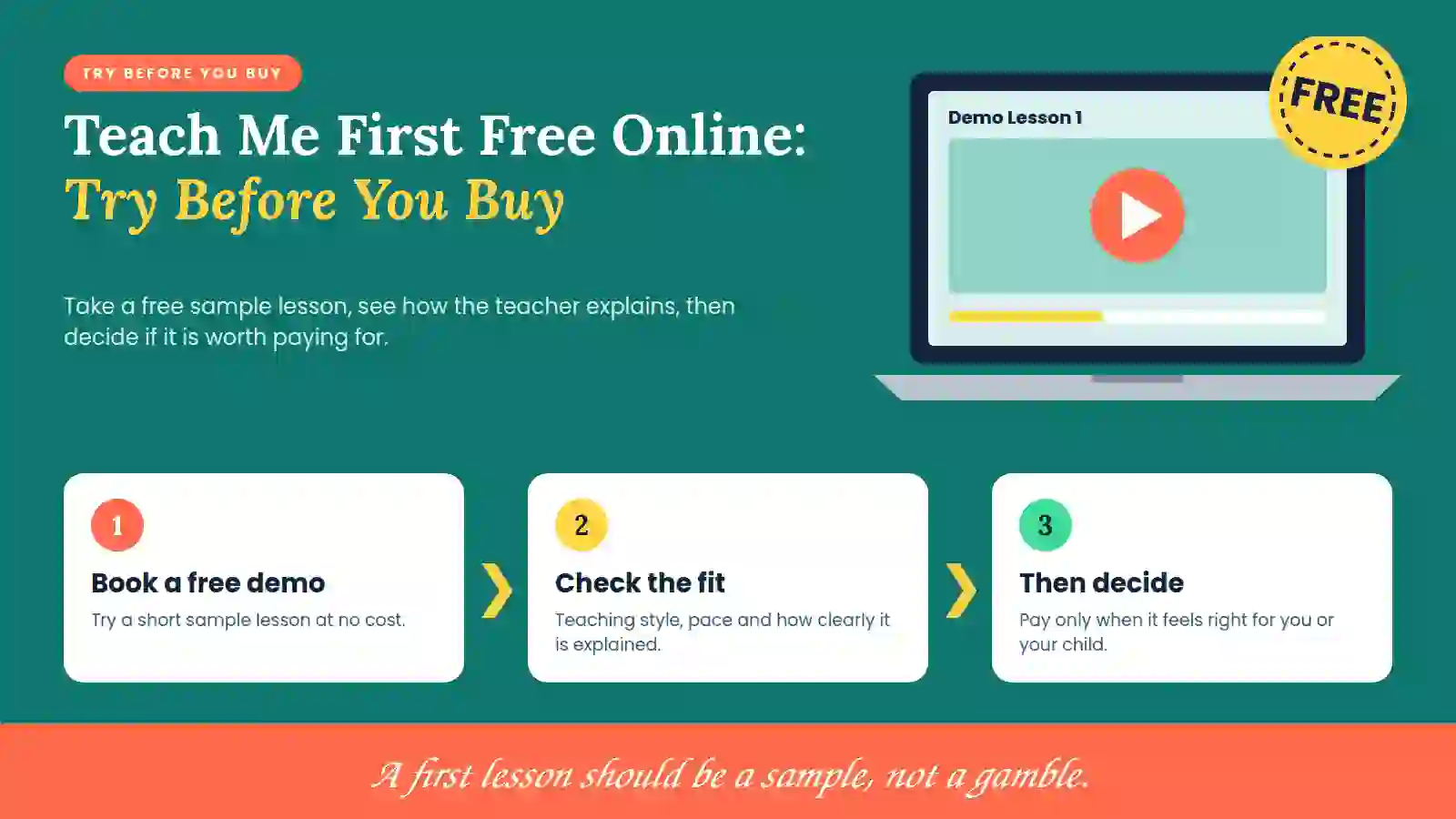
Cost matters, because Stanford’s Eric Bettinger called it a real scandal that teachers get such poor materials they end up paying out of pocket, especially given how much is free online. His point is worth keeping in mind. Paying shouldn’t be your first move. edsource
Here’s a “teach me first, free online” approach that costs nothing to start.
Step 1: Start with free libraries
Begin with free repositories such as ReadWriteThink or Share My Lesson. They scored well on text quality in the Fordham review, and they cost nothing.
Step 2: Use free previews and samples
Most paid sellers offer a free resource. Download two or three from different sellers and run them through the checklist above. Think of it as a test drive.
Step 3: Pilot with one class
Run the lesson once. Note what confused students, what took too long, and what worked. Only then consider buying more from that seller.
Step 4: Compare against a free alternative
Before you purchase, search for a free version of the same topic. If it’s as good, you’ve saved money. If it isn’t, you’ll know why the paid version earns its price.
This “free first, then invest” habit protects your budget and trains your eye for quality at the same time.
6. What Sellers Actually Gain: It's Not Just Money
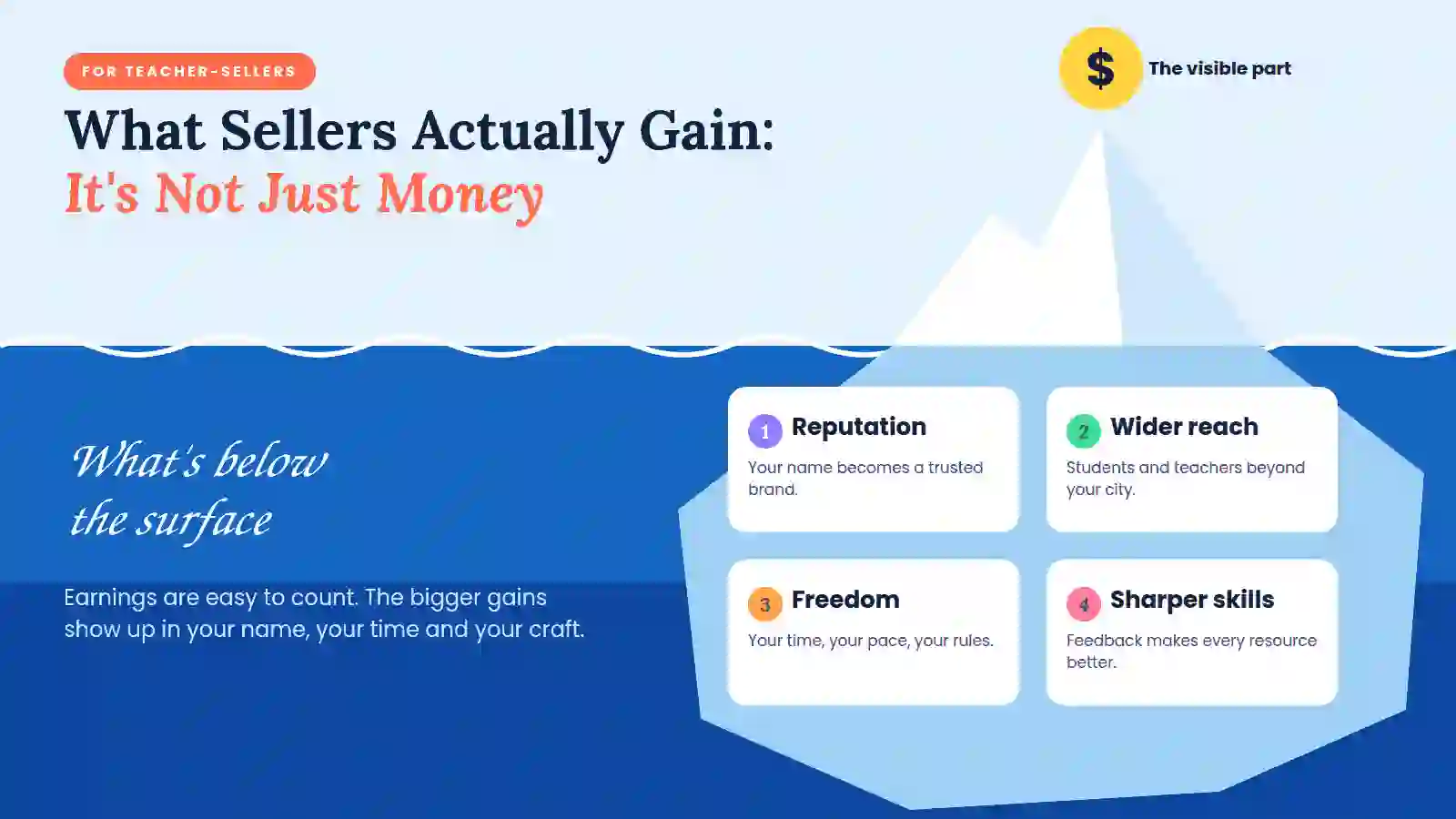
Now let’s flip to the other side of the counter. If you’ve ever wondered whether selling is worth the effort, the research offers an unexpected answer.
Who sells?
A survey of 412 TpT sellers found they were predominantly female, white, highly educated, and experienced practitioners, who spent considerable time creating resources, collaborating with teachers online, and building their business. Most kept their school work and their business work separate. nau
The surprising benefit
A follow-up study in The Elementary School Journal surveyed 226 TpT sellers and asked what predicted improvements in their own teaching. Teaching gains were significantly predicted by collaborating with other teachers, acting as a teacher leader, and taking part in enterprising actions. nau
Here’s what that implies. Sellers aren’t just earning from their materials. Many report becoming better teachers because the process pushes them to think about how others will use a lesson. Earlier research found that teacherpreneurship motivated teachers to try unique approaches and exposed them to new ways of thinking about education. nau
A caution is in order. These are self-reported gains from survey data, so they show an association rather than proof. Still, it’s an angle you almost never see in “make money selling lesson plans” articles.
A realistic income picture
Early adopters sometimes had very modest starts. One seller told EdSource, “In my first month I made $50,” and hoped it might someday help with a mortgage. That’s a useful reality check. Building a store is closer to building a small business than to flipping a switch. edsource
If you’re considering it, plan for months of steady work, not weeks. And check the platform’s current commission and fee structure on its own site, because those terms change. A 2017 report described a 40% commission for free members and 15% for premium members at $59.95 a year, but verify today’s numbers directly before relying on them.
Build Your Own Teach Record
Here’s an idea that sits underneath everything above, and it’s one most teachers skip.
A teach record is simply a running log of what you teach, what you used, and how it went. Think of it as a professional notebook that’s actually searchable. This is my own practical suggestion, not something from the studies, but it addresses a real problem those studies reveal.
If popularity doesn’t tell you quality, and if teachers constantly assemble materials from many places, then your own results become your best data. A teach record turns scattered downloads into evidence.
What to track
- The resource: title, source, and the date you used it
- The standard it targeted: so you can spot gaps later
- What happened: a quick note on engagement and understanding
- What you changed: edits you made, so you don’t redo work next year
- Rating: a simple 1 to 5 score, just for you
Why it pays off
First, you stop re-buying or re-downloading things that didn’t work. Second, you build proof of your own growth for evaluations or job applications. Third, if you ever decide to sell, your best-performing lessons are already identified. You’ll know exactly which ones to polish and publish.
A simple spreadsheet works fine. The tool matters far less than the habit.
7. Shared Learning: The Real Power of the Marketplace
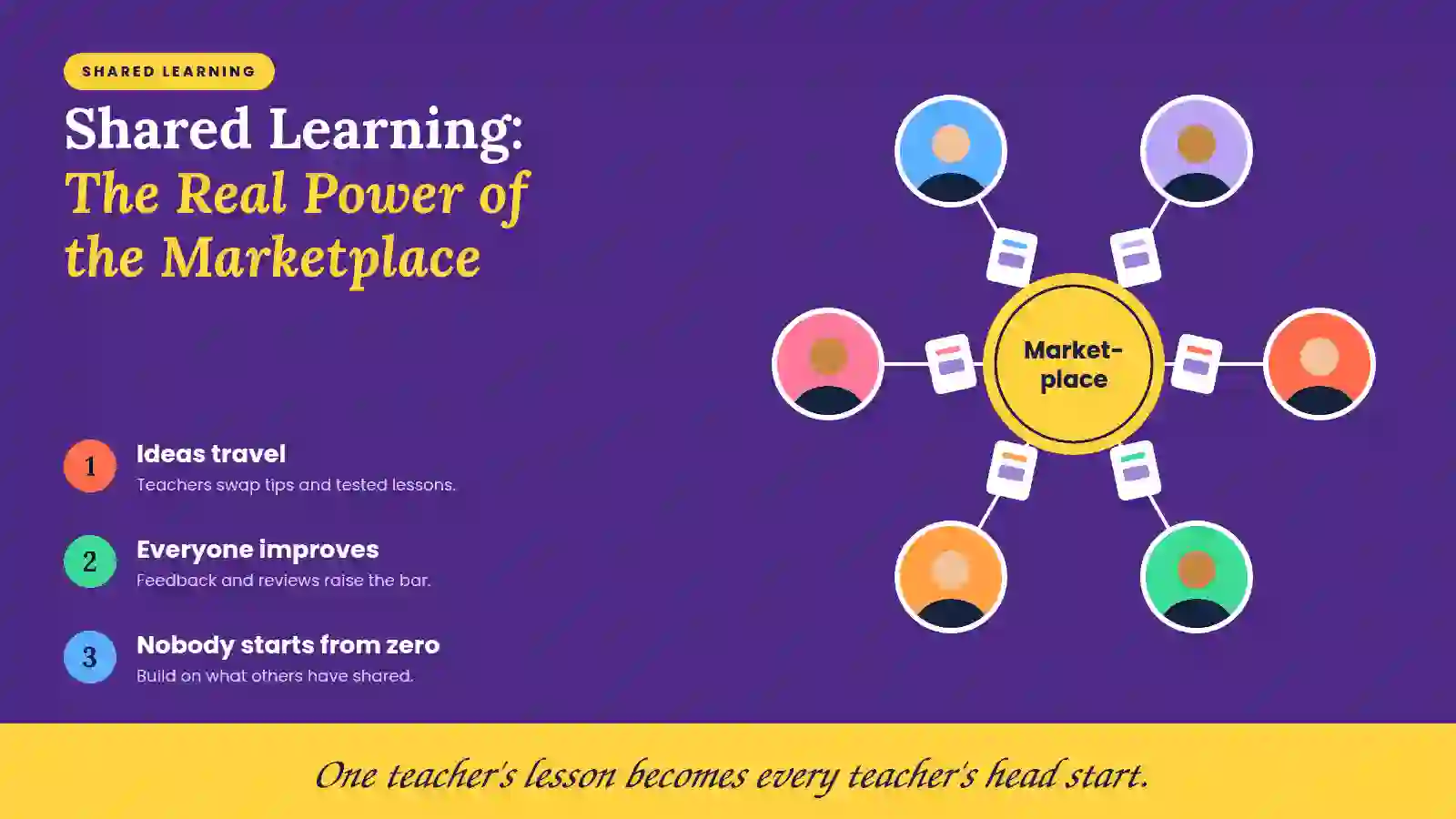
When people talk about an online marketplace for teachers, they usually focus on transactions. But the research hints that the bigger value is shared learning.
Remember the finding that collaborating with other teachers predicted gains in teaching practice. That’s shared learning in action. The files are almost secondary. What matters is the conversation, feedback, and idea exchange around them.
How to get more from shared learning
- Swap, don’t just download. Trade a lesson with a colleague and give each other feedback.
- Adapt and credit. If you change a resource, note what you changed and why. It sharpens your thinking.
- Join online teacher communities. Researchers found that online teacherpreneurs spend considerable time collaborating with other teachers, so the community side is clearly part of the appeal.
- Share your failures too. A note about what didn’t work is often more valuable than a polished success.
Shared learning also fits a wider shift in how work gets done. As automation changes many professions, human skills like collaboration, judgment, and adapting content to real students become more valuable. If that topic interests you, read our related guide: What Jobs Are Safe From AI? Teaching ranks high in conversations about work that depends on human connection.
8. The Legal and Ethical Gray Areas
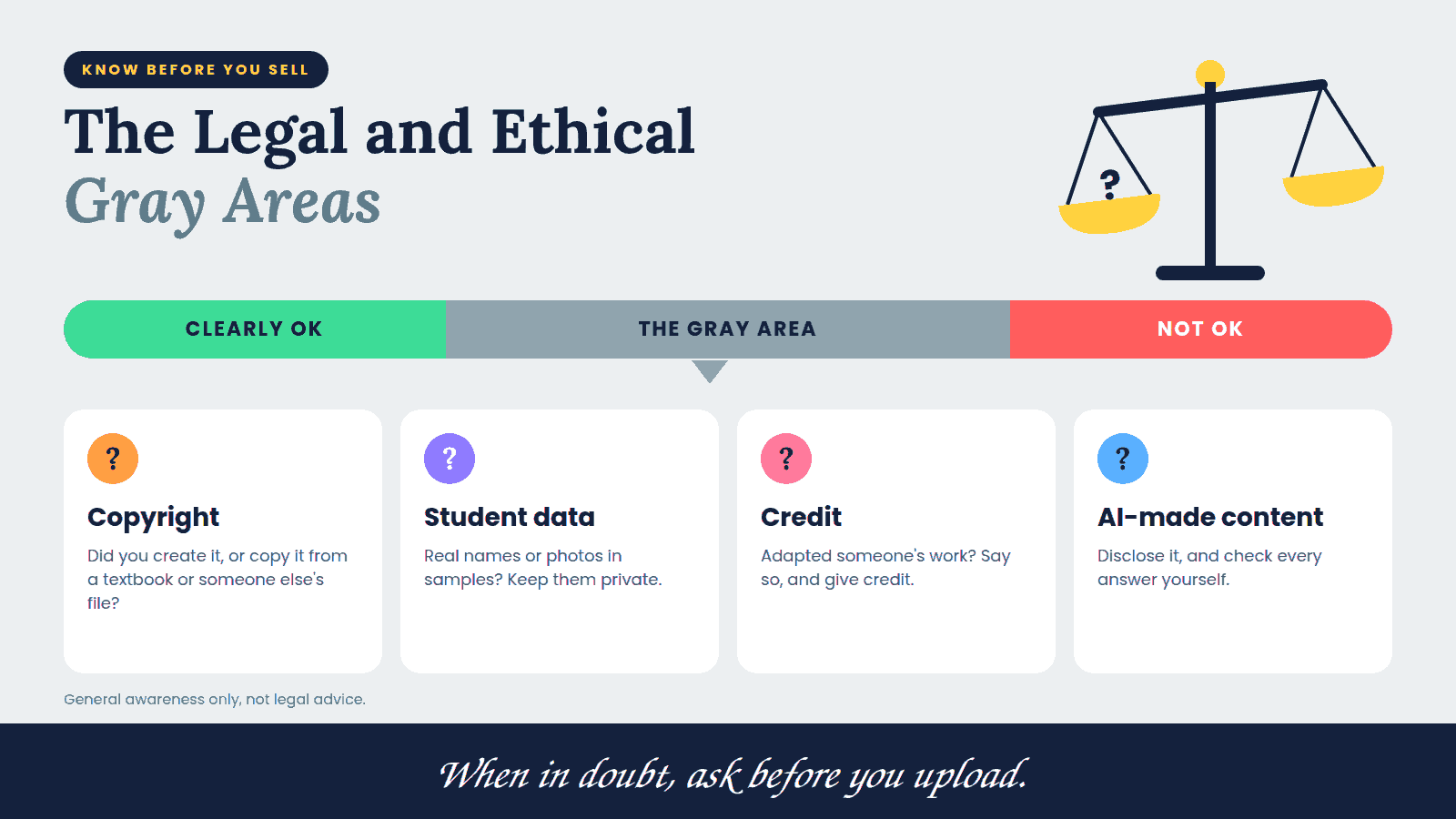
Before you sell anything, understand the ground rules. This part trips up even experienced teachers.
Who owns what you create?
A 2010 report noted that questions remained about who owns the educational materials, and whether a school district deserves all or part of the money a teacher earns. Many districts at that time had no policy at all. Policies have developed since, and some contracts address this directly. According to one report, some states even prohibit teachers from selling educational materials online in their contracts. eschoolnewsgigazine
Practical step: Read your employment contract and district policy before you list anything. If it’s unclear, ask HR in writing. This isn’t legal advice, so for anything high-stakes, talk to a qualified attorney or your union.
Stolen and copied work
Education Week has reported that some sellers on TpT have profited from stolen work. So there’s a risk on both sides. As a buyer, you can’t assume a listing is original. As a seller, you must never copy material, including images, fonts, or worksheets from other sources, without proper rights. editlib
[…] How It Works, How It Differs From Institutional Ads, and Why Testimonials Change Everything Online Marketplace for Teachers: What the Research Says About Income, Quality, and Shared Learning… What Jobs Are Safe From AI? The Careers With the Lowest AI Risk Keywords for Facebook Posts: […]