

You open Facebook, write what you think is a great update, hit publish, and get three likes. One of them is your cousin.
It’s frustrating, and the numbers show you’re not alone. Facebook’s average engagement rate sits at about 0.15%, and that has stayed flat year over year. Most posts get very little interaction, even from good pages. socialinsider
Facebook rewards posts that start real conversations. It punishes posts that beg for clicks. This guide covers the keywords for Facebook posts that spark replies, plus engagement post ideas, a few things most guides skip, and a realistic look at “fake Facebook post” tools. You’ll also see where the benchmark data is less clear than it looks.
1. What Are "Keywords for Facebook Posts" and Do They Matter?
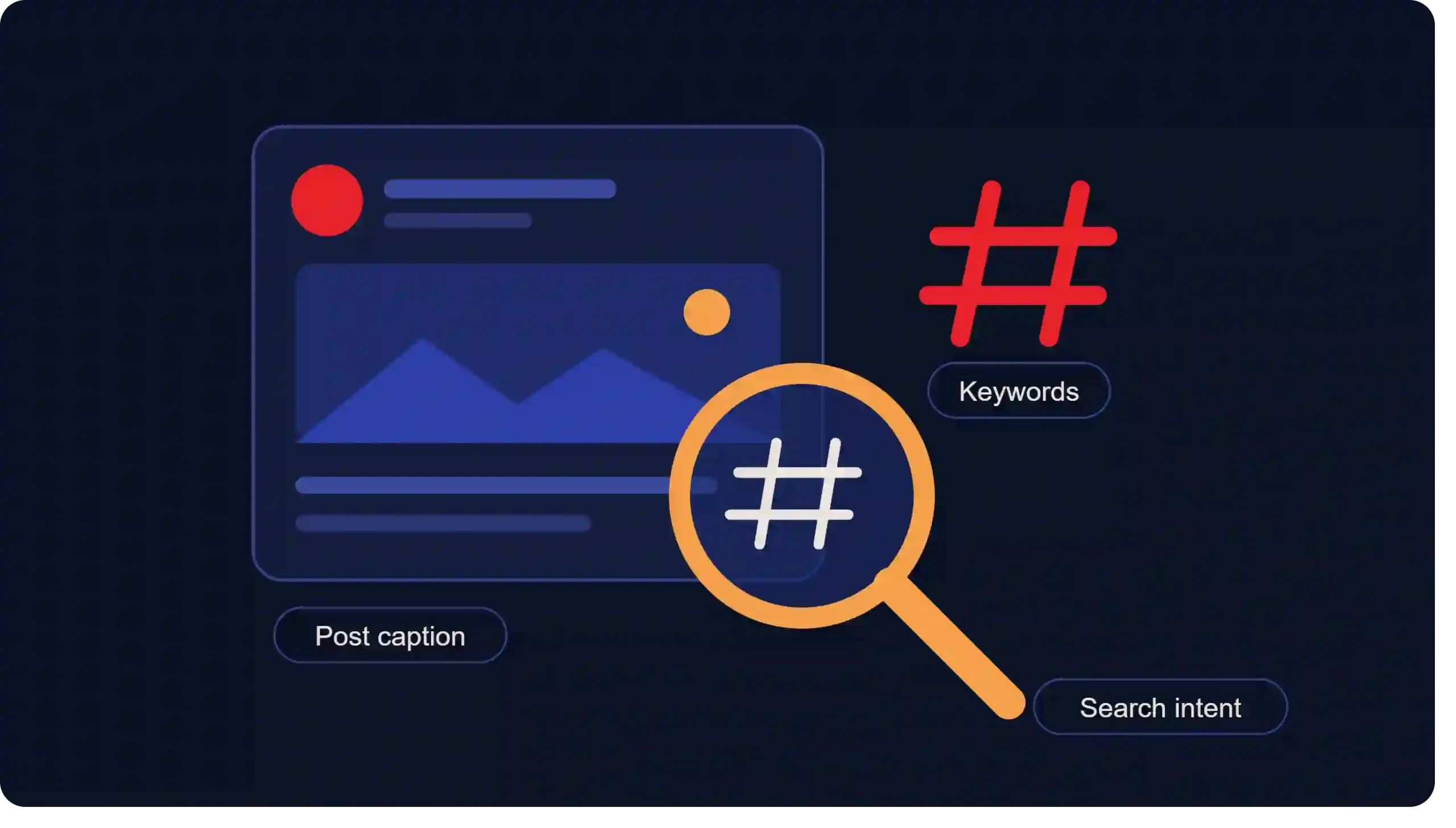
Quick answer: Keywords for Facebook posts are the words and phrases in your captions that tell Facebook and your audience what the post is about. They help people find your content through search and help the algorithm decide who might care about it.
Facebook is not Google. Nobody searches “best sourdough tips” and lands on your post the way they would on a blog. But Facebook has its own search bar, Groups search, and recommendation system. All of them read your words.
Keywords matter in two ways:
- Discovery. Clear, specific words help your post surface in search and suggestions.
- Audience signals. The words you use attract the right people. A post that says “beginner running plan” attracts different readers than one that says “marathon pacing strategy.”
Think of keywords as labels, not decorations. One or two natural phrases in the first line of a caption do more than ten hashtags piled at the bottom.
Keyword Types That Work on Facebook
Facebook captions respond best to words that match how real people talk. Here are four groups worth using:
- Question words: “how do you,” “what’s your favorite,” “anyone else”
- Experience words: “my first,” “I learned,” “last week I tried”
- Local words: your city, neighborhood, school, or team name
- Topic words: the specific subject, such as “meal prep,” “budget travel,” or “photo editing”
Socialinsider’s analysis recommends posting relatable, experience-based content and encouraging small interactions. That matches this list: shared experiences and micro-engagement are both on its list of tactics. socialinsider
2. The Number Most Guides Get Wrong: Engagement Rate Has Two Different Math Problems
Most “Facebook engagement” articles quote a percentage without telling you how it was calculated. That makes the number close to useless.
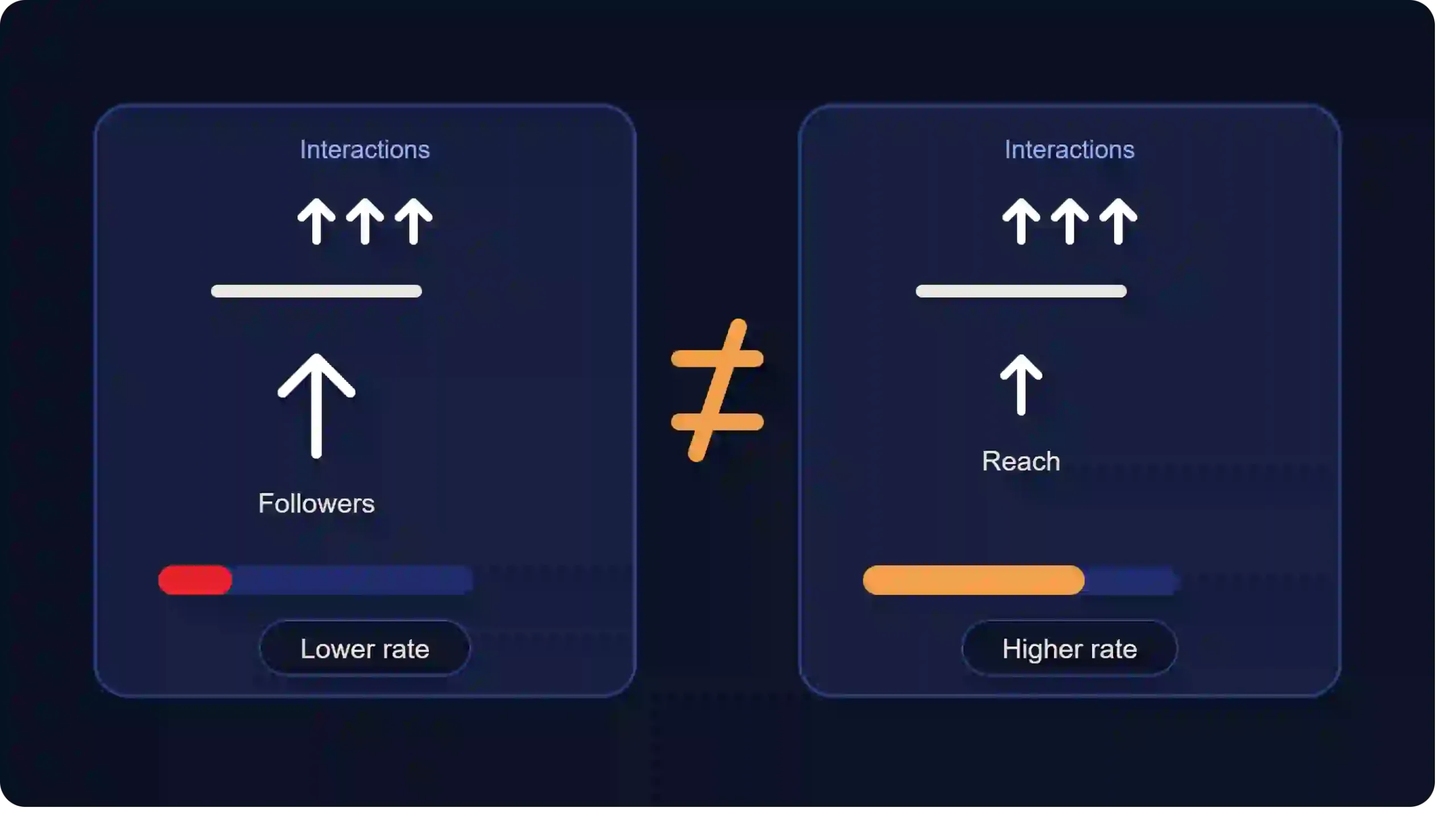
Facebook counts engagement as actions on a post: reactions, comments, shares, and clicks. But the rate you see depends on what you divide by: shortgenius
- By followers (fans): interactions divided by your follower count.
- By reach: interactions divided by everyone who actually saw the post, including non-followers.
One analysis gives a clear example. A post reaching 500,000 people at 0.15% engagement by reach produces 750 interactions, while a 5% rate by fans on a post seen by 200 followers is only 10 interactions. The smaller percentage produced far more action. shortgenius
The same source warns against comparing a reach-based rate with a fan-based rate. That one rule saves you from a lot of bad conclusions.
What to do: Pick one method, write it down, and track it monthly. Compare your own results against your own past results first. Industry averages come second.
3. Which Post Types Get the Most Engagement?
Here is what the 2026 data shows, with a caveat. Different reports use different methods, so the numbers don’t always line up.
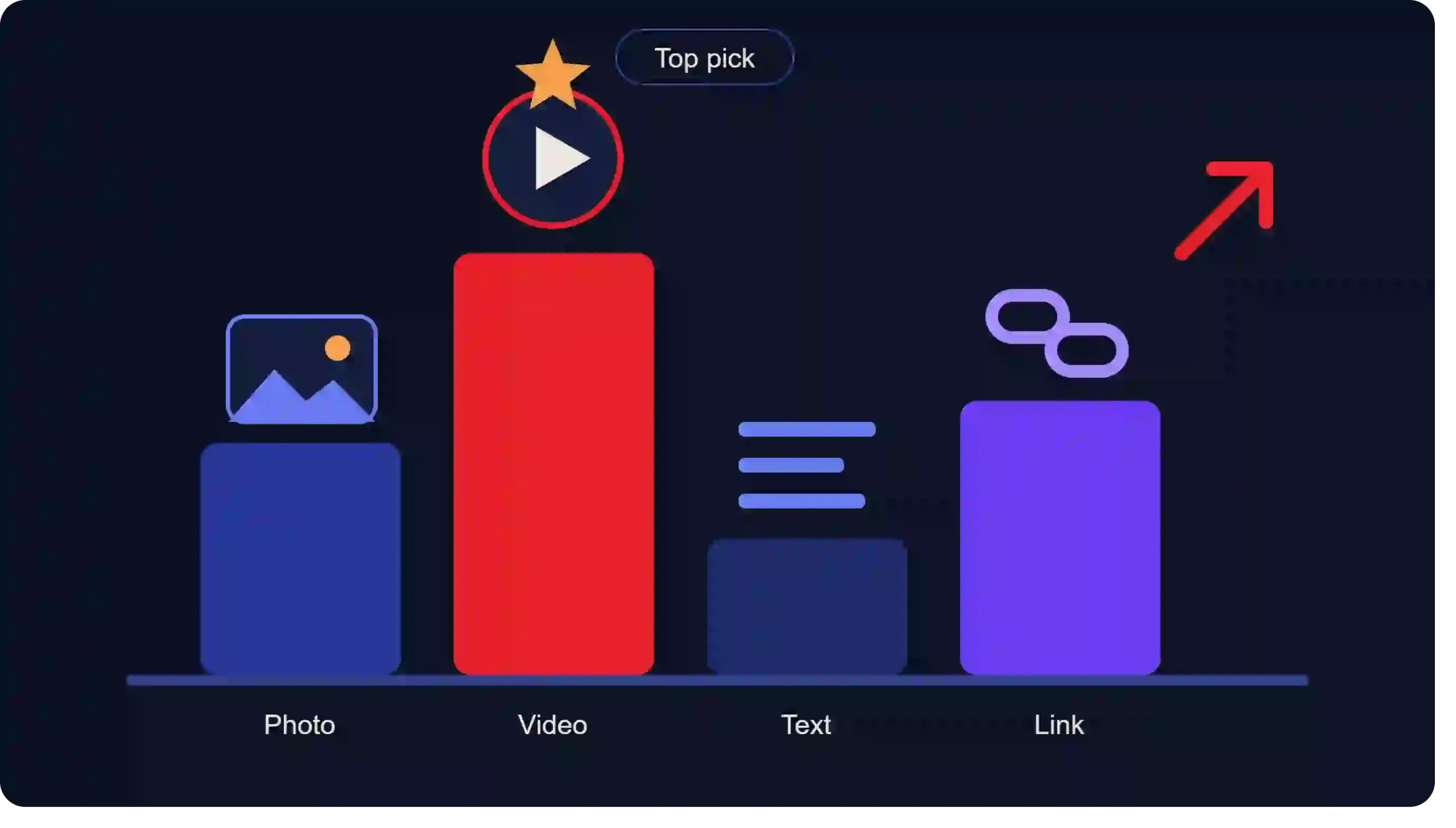
According to Socialinsider’s 2026 benchmark report, Reels remain the most engaging format on Facebook, though their rate fell to 0.13% in Q2 2026 from 0.15% in Q1. Album posts dipped to 0.11%, and image posts fell to 0.10%. socialinsidersocialinsider
The German-language version of the same report adds a surprising detail. Status posts took the biggest hit, with engagement falling to 0.08% in Q2 2026 from 0.13% in Q1, the steepest quarterly decline of any format that year. Yet the same report says status posts had the highest engagement rate in 2025, at 0.20% compared with 0.15% in 2024. socialinsidersocialinsider
So text-only posts went from the best performer to the worst-hit in about a year. If you wrote off plain text posts, or still rely on them, that swing is worth knowing.
A separate analysis using fan-based rates shows the usual ordering: photo posts at 0.09%, status posts at 0.04%, and link posts at 0.02%. Link posts have been weak for a long time, so if your whole strategy is “post a link and hope,” expect low interaction. shortgenius
Takeaway: Don’t pick a format because an article says it’s “best.” Test two formats against each other for a month on your own page.
4. Social Media Engagement Posts: What Facebook Actually Punishes
This is where many pages lose reach without realizing it.
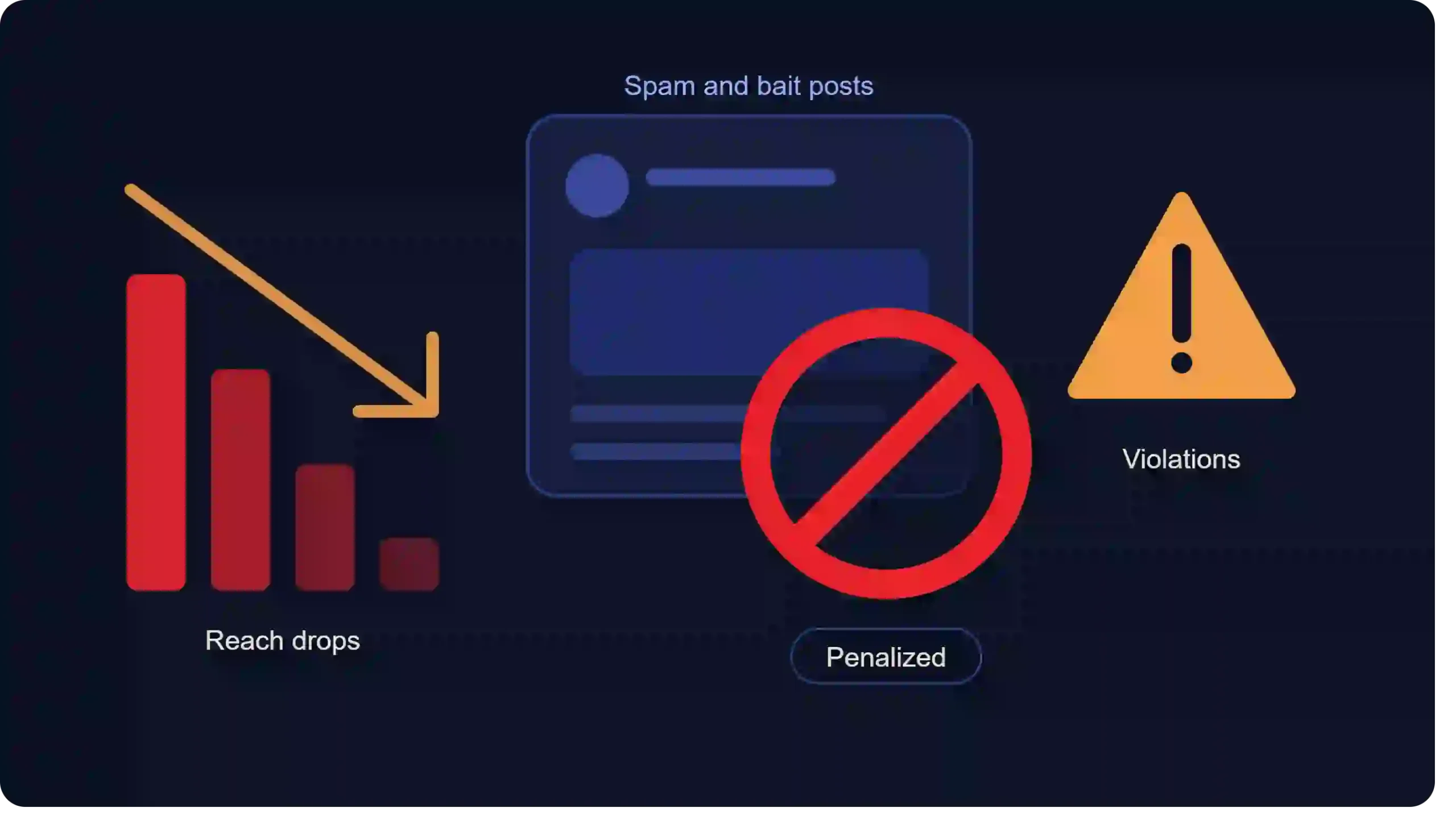
In December 2017, Facebook announced it would demote posts that push people to react, share, or comment just to boost reach. Meta’s newsroom explained that this tactic, called engagement bait, tries to exploit the News Feed algorithm to gain more reach. The company said it trained a machine learning model on hundreds of thousands of reviewed posts to detect it. fbfb
The Five Types of Engagement Bait
Most people know one or two. Reporting at the time described five categories: vote baiting, react baiting, share baiting, tag baiting, and comment baiting. Examples include asking people to like a post if they share a star sign, or to share with ten friends for a chance at a prize. Fox News
The rules got wider later. Meta’s own update log says the company began demoting comments containing engagement bait in November, and videos with engagement bait in the audio from January 30, 2019. So even a spoken line like “smash that like button” in a video was fair game. fb
The Exception Almost Nobody Mentions
Not every request for interaction is bait. Coverage from Axios noted that posts asking for help, advice, or recommendations are exceptions, such as a missing-child report or fundraising for a cause. Axios
That is useful. A page can honestly ask, “Which of these two logos do you prefer, and why?” because the answer helps the business. A post demanding “Like if you love Mondays” has no purpose beyond the number.
A simple test: Would you still want the answer if the like counter disappeared? If yes, it’s a real question. If no, it’s bait.
Pages that repeat the habit pay for it. Meta said pages that systematically use engagement bait would see stricter demotions and bigger drops in reach. fb
5. Engagement Post Ideas for Facebook (25 Prompts You Can Use This Week)
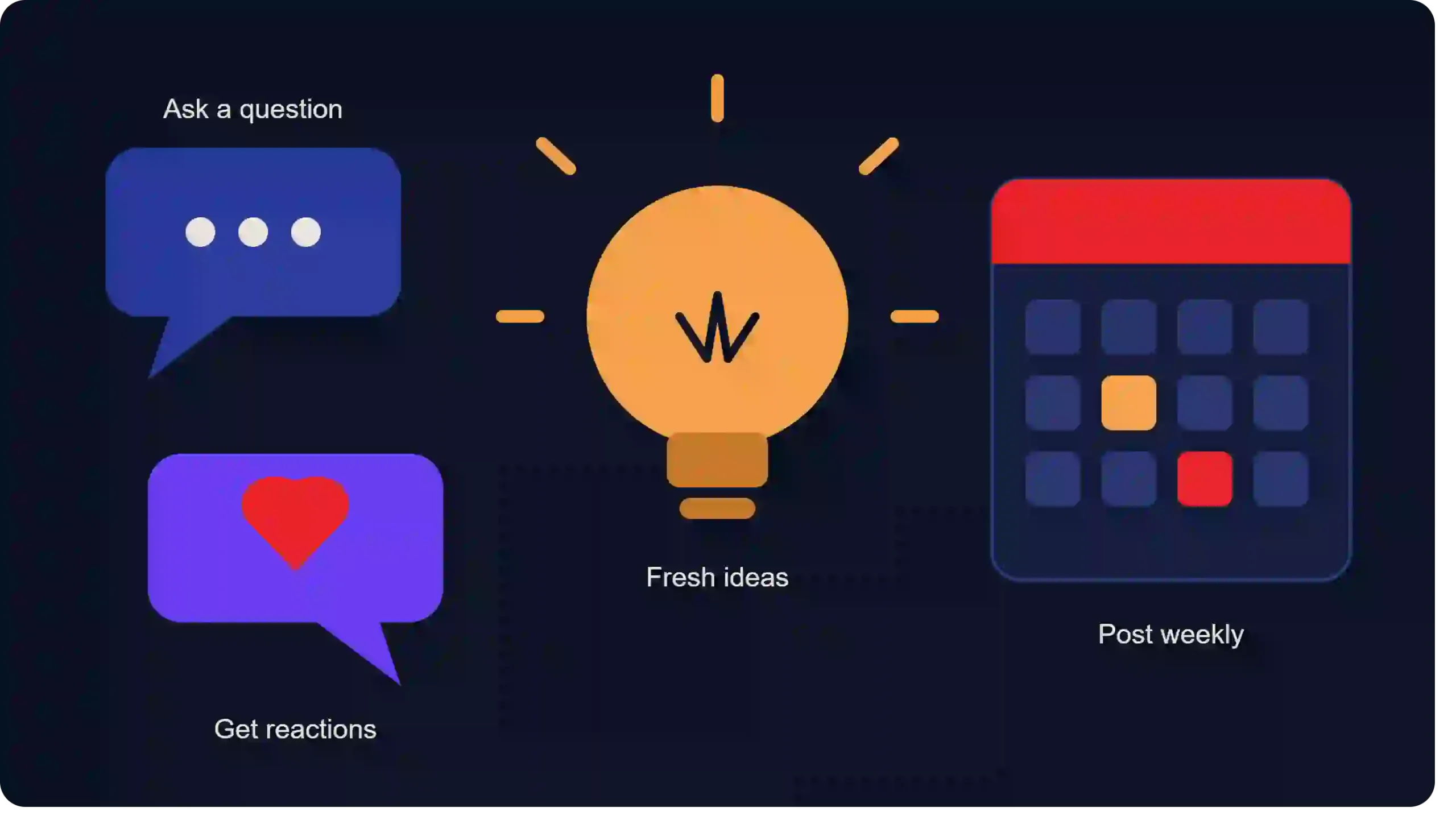
Here are engagement post ideas grouped by purpose, each one built around a real question or story. Swap in your own topic and keywords.
Conversation Starters (Question-Based Posts)
- “What’s one tool you stopped using this year, and why?”
- “Which was harder when you started: [your topic] or [related topic]?”
- “If you had one hour to teach a beginner [your skill], what would you cover?”
- “What’s a mistake you made in [your field] that you’d warn others about?”
- “Which would you pick: [Option A] or [Option B]? Tell me what you’d use it for.”
These work because they ask for an opinion with a reason, not just a vote.
Story Posts (Experience-Based)
- A short “this went wrong, here’s what I learned” post
- A before-and-after of a real project
- A “first day vs. today” story about your business or hobby
- A customer or community moment, shared with permission
- A behind-the-scenes photo with two honest sentences about it
Helpful Posts (Value-First)
- A three-step mini tutorial in the caption
- A checklist people can screenshot
- A myth in your industry and the real answer
- A “tool I use for [task]” recommendation with one honest drawback
- A short list of mistakes beginners make
Community Posts
- A “share your setup” or “show your workspace” thread
- A weekly recurring question, such as “Monday Wins”
- A poll followed by a post explaining the results
- A “teach me something” post asking your audience to share a tip
- A local recommendation request, if you serve a local area
Visual and Reel Ideas
- A 15 to 30 second tip video
- An album post of a project in progress
- A single clear image with a one-line question in the caption
- A short Reel answering the most common question you receive
- A carousel-style album with each photo showing one step
If you’re making images for these posts, our guide to the Best ChatGPT Alternative for Image Editing can help you create clean visuals quickly.
6. The Truth About a "Fake Facebook Post"
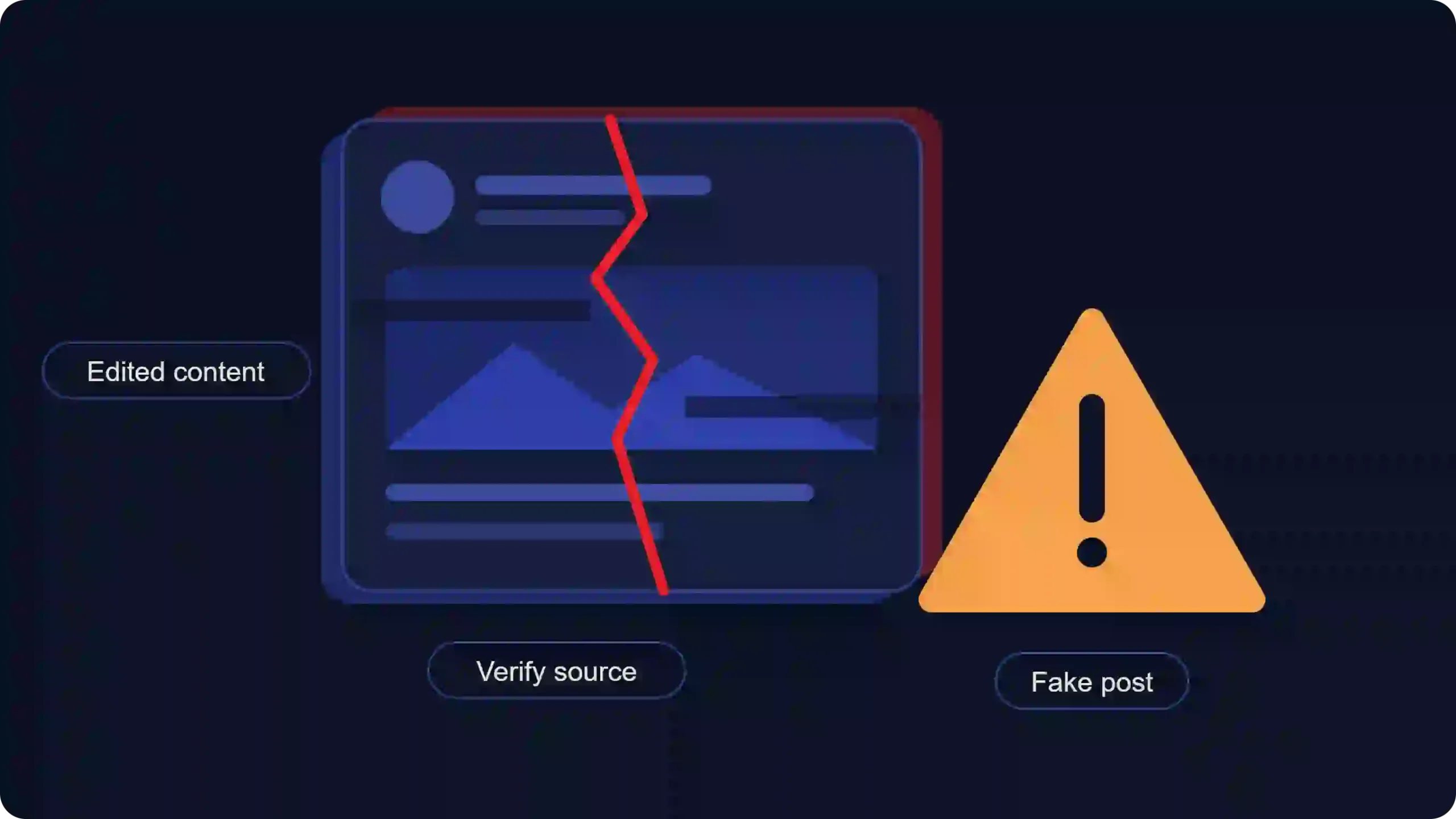
People search for “fake Facebook post” for several reasons, and most are harmless. A fake Facebook post generator creates a mockup that looks like a real post but isn’t one.
Legitimate Uses
- Design and presentation mockups. Showing a client how a campaign would look.
- Teaching media literacy. Classrooms use mock posts to show how misinformation spreads.
- Satire and parody. Clearly labeled humor, with no real person’s name or likeness used to mislead.
- Testing layouts. Checking how a caption, image, and button fit on screen.
Uses That Cause Real Harm
- Pretending a real person or brand said something they didn’t
- Using a mockup as “proof” in an argument, a dispute, or a scam
- Posting it without any label as though it were real
Meta takes impersonation seriously. In the first half of 2025, Facebook removed nearly 10 million fake profiles pretending to be well-known content creators and took action against about 500,000 accounts for spam and fake engagement. vietnamnews
Rule of thumb: If someone could reasonably mistake your mockup for the real thing, label it clearly and keep real names out of it. Used honestly, a mock post is a design tool. Used to deceive, it can cost you your account.
7. The Originality Rule: Why Copying Viral Posts Backfires
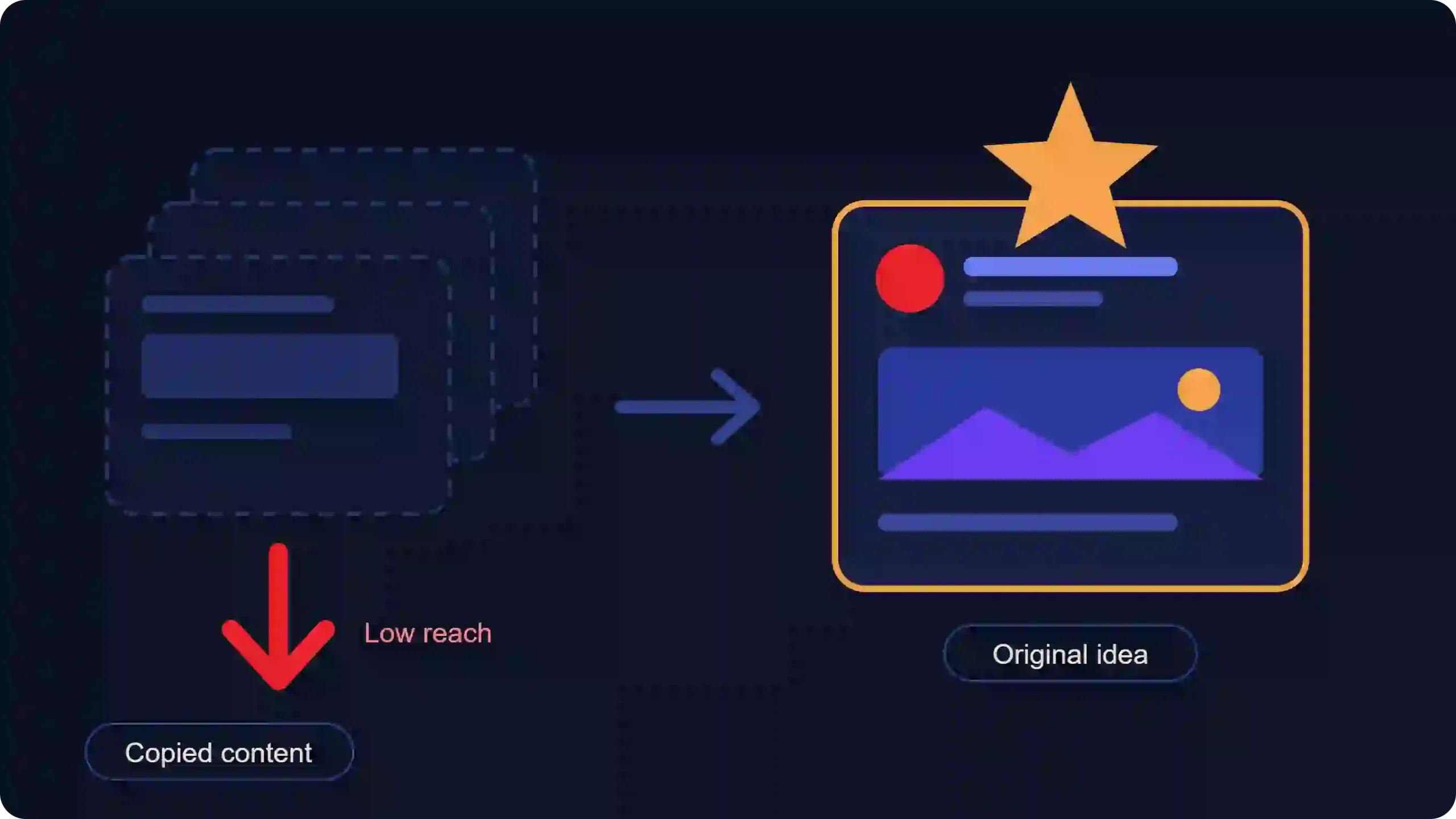
Many pages grow by copying what already went viral. That strategy now works against them.
In 2025, Meta announced a wider crackdown on unoriginal content. Meta’s statement, as reported by Bitdefender, said accounts that repeatedly reuse someone else’s videos, photos, or text posts will lose access to Facebook monetization for a period and will get reduced distribution on everything they share. bitdefender
Note that last part. The penalty isn’t limited to the copied post. It applies to the whole account.
Two details most guides skip:
- Text posts are included. This isn’t only about videos. Copying someone’s written post counts.
- Copies lose to originals. Reporting on the update said that when duplicate videos are detected, Facebook reduces the reach of the copies and prioritizes the original. eastleighvoice
Meta has also tested showing viewers a link to the original creator on copied content, according to the same coverage.
What this means for your captions: When you borrow an idea, rewrite it in your own words and add your own example. A prompt like “What’s your biggest [topic] mistake?” is a format, and formats are free to use. A copied paragraph is not.
8. How to Build Your Own Keyword List for Facebook Posts (Step by Step)
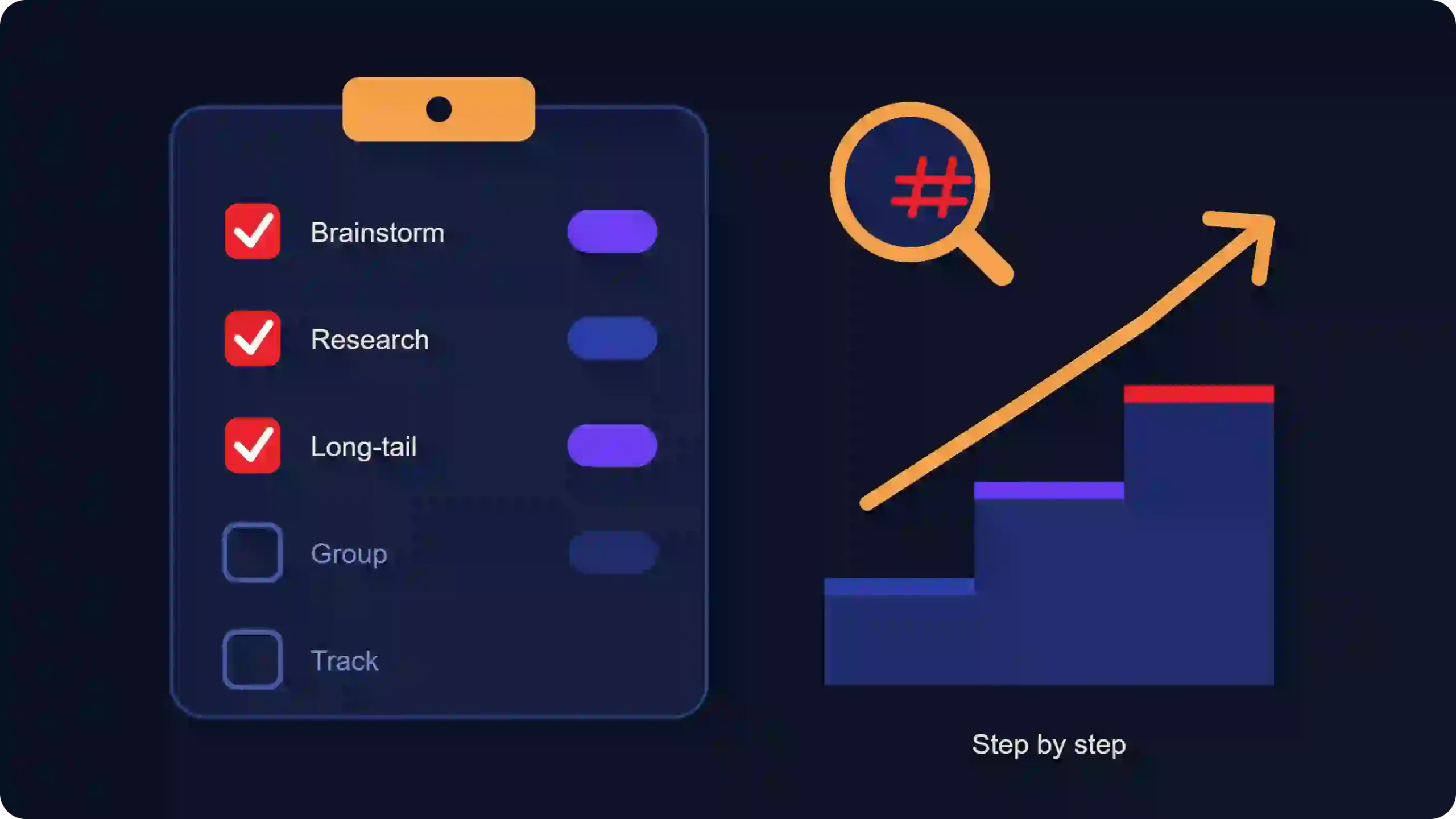
You don’t need paid tools to start.
Step 1: Mine your comments and messages. The words your audience uses are your best keywords. If three people ask about “cheap flights in June,” that phrase belongs in a caption.
Step 2: Check Facebook’s search suggestions. Type your topic into the search bar and see what autocomplete offers. Those are phrases real people search.
Step 3: Look at your best past posts. Use the Professional Dashboard to find your top posts and note the repeated words. Meta now lets creators see how each post performs through the Professional Dashboard. vietnamnews
Step 4: Group your list by purpose. Keep separate lists for questions, stories, tips, and local terms. That keeps your captions varied.
Step 5: Put the main keyword early. Place your main phrase in the first sentence, where it’s read first and seen in previews.
Step 6: Track and drop. Every month, remove phrases that never produce replies and keep the ones that do.
Sample Caption Before and After
Before: “New blog post up! Click to read.”
After: “Anyone else struggle to come up with engagement post ideas every week? I wrote down the five prompts that actually got my readers talking. Which one would you try first?”
The second version has a natural keyword, a real question, and a reason to reply.
Common Mistakes That Quietly Kill Engagement
- Stuffing keywords. A caption that repeats “best Facebook tips” four times reads like spam.
- Asking for likes directly. This is exactly what Meta’s 2017 policy targets.
- Posting only links. Fan-based data shows link posts getting the lowest interaction.
- Ignoring comments. If nobody answers replies, people stop writing them.
- Judging by one post. A single post proves nothing. Look at a month of data.
- Comparing the wrong numbers. Mixing reach-based and fan-based rates, as covered above, leads to wrong conclusions.
Quick Posting Checklist
Before you publish, check these five things:
- Is the post original, or did I rewrite it in my own words?
- Does the first line contain a natural keyword?
- Does it ask a real question I want answered?
- Does it avoid begging for likes, shares, or tags?
- Is there a clear visual or a short video attached?