
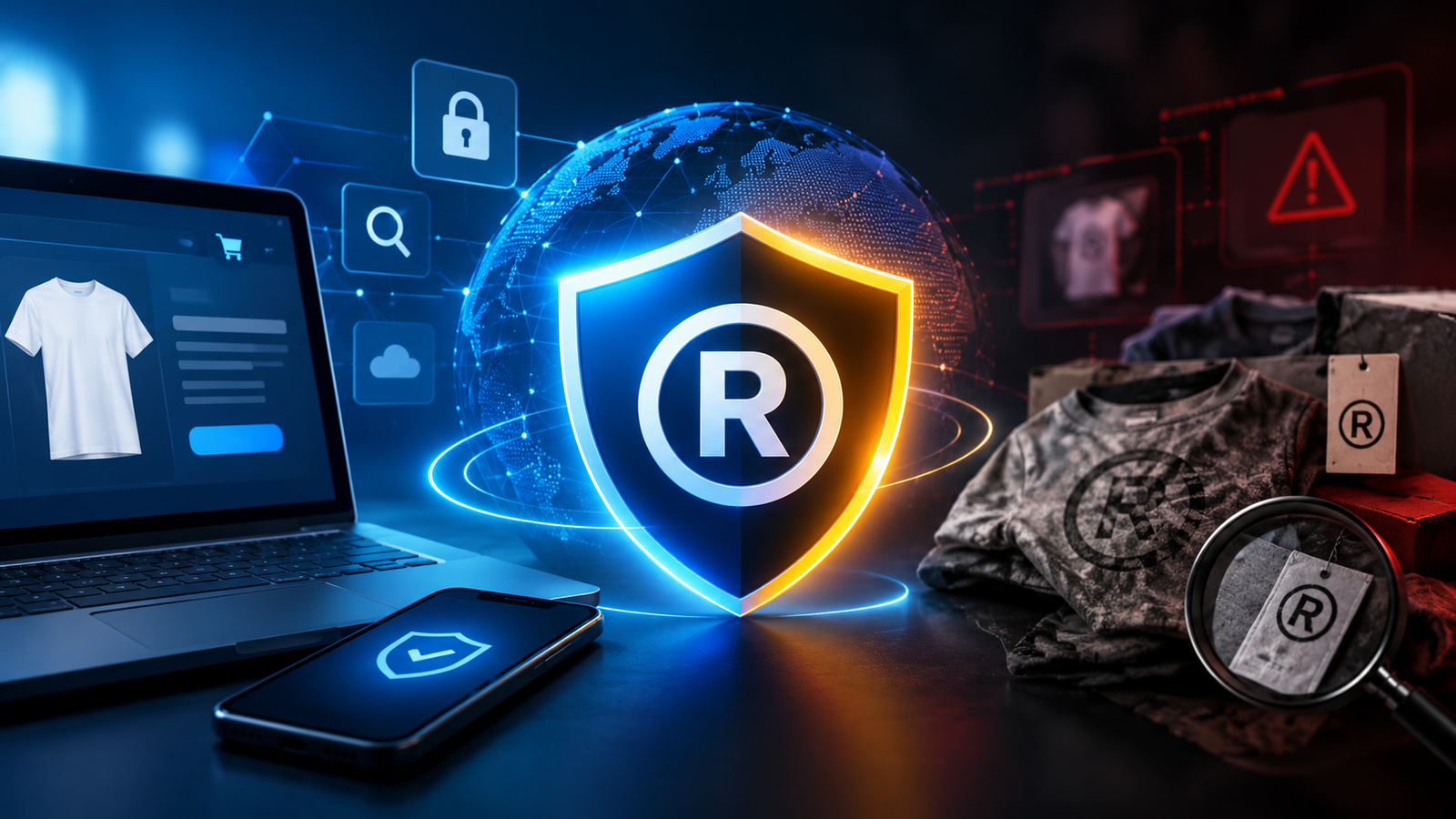
Picture this: a customer buys what they think is your product from a marketplace listing that looks completely legitimate. The photos match. The logo is right. The price seems fair. Three weeks later, it falls apart, and that customer leaves a scathing one-star review on your actual page — the one you never had anything to do with the fake.
This scenario plays out thousands of times a day across e-commerce platforms worldwide. It’s not a hypothetical anymore. It’s the reality of running a brand in 2026, where counterfeiters move faster, look more convincing, and hide better than ever before. And it’s exactly why finding the right branding solution has stopped being a “nice to have” for growing companies and become a core part of doing business online.
In this guide, we’ll walk through what a modern branding solution actually looks like, why creative approaches to brand building matter just as much as legal protection, how anti-counterfeiting technology functions behind the scenes, and just how much of a difference artificial intelligence is really making in the fight to keep brands safe. By the end, you’ll have a clear picture of what to look for and how to start protecting the identity you’ve worked so hard to build.
1. What Exactly Is a Branding Solution (And Why Does It Matter So Much Right Now)?
A branding solution is a combination of strategy, tools, and technology designed to build, manage, and protect a company’s identity across every channel where customers encounter it. That used to mean logo guidelines, a style guide, and maybe a trademark filing. Today, it means something far broader.
Modern branding solutions typically cover:
- Visual and verbal identity development (logos, tone of voice, messaging frameworks)
- Digital brand monitoring across marketplaces, social platforms, and search engines
- Anti-counterfeiting and brand protection technology
- Customer trust signals like authentication tools and verified seller badges
- Ongoing reputation management and takedown services
The shift happened because the threats to a brand’s identity multiplied. It’s no longer just about whether your logo looks professional — it’s about whether someone three time zones away is selling a knockoff version of your product under your exact name, using your exact photos, on a platform where your actual customers shop every day.
Small and mid-sized businesses are hit particularly hard here. Larger corporations have legal teams and dedicated brand protection departments. Smaller companies often don’t discover the counterfeit problem until customer complaints start rolling in, and by then, real damage has already been done to trust and revenue.
2. Why Creative Branding Solutions Are More Important Than Ever
There’s a temptation to think of brand protection as purely defensive — a legal or technical function bolted onto marketing. That’s a mistake. The most resilient brands treat creativity and protection as two sides of the same coin.
Here’s why creative branding solutions matter so much:
Distinctiveness is your first line of defense. A brand identity built on generic templates and stock visuals is far easier to copy convincingly. When your visual language, packaging design, and messaging are genuinely distinctive, counterfeiters have a harder time producing a fake that fools anyone who’s paid real attention to your brand. Distinctive design isn’t just an aesthetic choice anymore — it’s a practical barrier against imitation.
Strong branding builds the customer loyalty that survives a scare. When a customer accidentally buys a fake, what happens next depends heavily on how strong their relationship with your real brand already is. Customers who feel genuinely connected to a brand — through consistent storytelling, memorable design, and authentic communication — are far more likely to reach out and verify before assuming the worst, rather than writing you off entirely.
Creative branding gives you more surface area to educate customers. Clever packaging inserts, distinctive unboxing experiences, and consistent visual cues across every touchpoint all give customers more ways to recognize the real thing. Every creative decision becomes, in a small way, a tool for authentication.
It differentiates you in crowded categories. Beyond counterfeiting, creative branding solutions simply help companies stand out. In markets where dozens of competitors sell nearly identical products, brand identity is often the actual deciding factor for a purchase.
The takeaway is simple: don’t separate your brand-building budget from your brand-protection budget. They should be working toward the same goal.
3. The Real Cost of Ignoring Brand Protection
Before getting into how anti-counterfeiting technology works, it’s worth pausing on why this matters financially. Counterfeiting isn’t a minor nuisance — it’s a massive global industry.
Estimates from international trade organizations have consistently placed the value of counterfeit and pirated goods in the hundreds of billions of dollars annually, and the growth of online marketplaces has only accelerated the problem. For an individual business, the costs show up in several ways:
- Lost sales to fake products that intercept demand meant for the genuine item
- Reputation damage when customers unknowingly buy counterfeits and blame the real brand for poor quality
- Erosion of pricing power, since counterfeits often undercut legitimate prices dramatically
- Legal costs tied to enforcement, cease-and-desist actions, and litigation
- Reduced customer lifetime value, as burned customers rarely give a brand a second chance
None of this is abstract. It’s the reason brand protection has moved from a legal department’s side project to a boardroom-level priority for companies of every size.
4. How Do Anti-Counterfeiting Solutions Work for Online Brands?
This is the question most business owners actually want answered: what happens, practically, when a company deploys an anti-counterfeiting solution? The process generally breaks down into a few connected stages.
1. Digital Monitoring and Detection
The first job of any anti-counterfeiting solution is finding the problem. This involves continuously scanning marketplaces (Amazon, eBay, Alibaba, and regional platforms), social media, and even search engine ads for listings that use a brand’s protected assets — logos, product images, trademarked names, and copyrighted descriptions — without authorization.
This used to be done manually, with brand protection staff searching platforms by hand. That approach simply can’t keep pace with how fast counterfeit listings appear and disappear today, which is part of why automated detection has become standard.
2. Verification and Risk Scoring
Not every unauthorized use of a brand asset is necessarily a counterfeit — sometimes it’s a legitimate reseller, a parody account, or a false positive. Effective anti-counterfeiting solutions include a verification step where flagged listings are assessed against known patterns: seller history, pricing anomalies, shipping locations, and image inconsistencies all feed into a risk score that helps prioritize which cases need human review first.
3. Enforcement and Takedowns
Once a listing is confirmed as counterfeit or infringing, the solution initiates enforcement. This usually means filing a formal takedown request with the platform hosting the listing, citing trademark or copyright infringement. Many major marketplaces have brand registry programs that speed this process up significantly for verified brand owners.
4. Legal Escalation Where Needed
For repeat offenders or large-scale counterfeit operations, digital takedowns aren’t enough. This is where brand protection connects with legal teams to pursue cease-and-desist letters, customs seizures for physical goods crossing borders, or litigation in more serious cases.
5. Authentication Technology at the Product Level
Beyond finding and removing fakes, many brands now build authentication directly into their products. This includes:
- QR codes or NFC chips linked to a unique product ID
- Holographic or micro-printed labels that are difficult to replicate
- Blockchain-based supply chain tracking that lets customers verify a product’s journey from manufacturer to shelf
These tools shift some of the verification burden to the customer in a helpful way — letting them confirm authenticity themselves before or after purchase, rather than relying entirely on the platform or the brand to catch fakes first.
6. Ongoing Reporting and Pattern Analysis
Good anti-counterfeiting solutions don’t just react to individual incidents. They track patterns over time — which platforms see the most infringement, which regions counterfeit activity originates from, which products are targeted most — so brands can adjust strategy and allocate resources more effectively.
5. How Effective Are AI Solutions in Brand Protection?
This is where the conversation has shifted the most in recent years. Artificial intelligence has moved from a buzzword in brand protection marketing to a genuinely functional part of how detection and enforcement happen at scale.
Where AI Makes a Measurable Difference
Image recognition at scale. AI-powered visual search tools can scan millions of product listings and compare images against a brand’s protected visual assets, flagging matches or near-matches far faster than any human team could manage manually. This is particularly effective at catching counterfeiters who reuse a brand’s actual product photography.
Natural language processing for listing analysis. AI models can scan product titles, descriptions, and even customer reviews for language patterns associated with counterfeit sales — certain phrasing, suspicious pricing language, or keywords counterfeiters use to evade basic filters.
Predictive pattern detection. Machine learning models trained on historical counterfeit data can identify emerging threats before they become widespread, flagging new seller accounts or listing patterns that resemble previous infringement cases.
Speed and scale. Perhaps the most significant advantage AI brings is simply volume. A human review team might catch dozens of infringing listings per day; an AI-assisted system can process and flag thousands, dramatically shrinking the window between when a counterfeit listing goes live and when it comes down.
Where AI Still Has Real Limitations
It’s worth being honest here: AI is a powerful tool, not a silver bullet. A few limitations matter:
- False positives still require human judgment. AI flags candidates; experienced brand protection staff still need to confirm genuine infringement versus legitimate use, especially in gray areas like resale markets or parody content.
- Sophisticated counterfeiters adapt quickly. As detection models improve, counterfeit operations adjust their tactics — slightly altering images, using coded language, or rotating seller accounts to avoid pattern detection.
- AI is only as good as its training data. Brand protection AI needs continuous updates and fresh data on new counterfeit tactics to stay effective, which means it requires ongoing investment rather than a one-time setup.
The honest answer to “how effective are AI solutions in brand protection” is that they’re highly effective as a force multiplier — dramatically increasing the speed and scale of detection — but they work best paired with human expertise for verification, legal judgment, and strategic decision-making. Brands that treat AI as a complete replacement for human oversight tend to see gaps in coverage; brands that treat it as an accelerant for human teams tend to see the strongest results.
6. Building a Comprehensive Brand Protection Strategy
Given everything above, what does a realistic, practical brand protection strategy actually look like for a growing business? A few components tend to show up across successful approaches:
- Start with strong trademark and IP registration. This is the legal foundation everything else builds on. Without registered trademarks, enforcement options are far more limited.
- Invest in distinctive, hard-to-copy brand design. As covered earlier, creative differentiation is itself a protective measure.
- Deploy monitoring technology proportional to your risk. A small business selling a niche product online has different needs than a global consumer goods company, and the right solution should scale with actual exposure.
- Build authentication into the product experience. Even simple QR-code verification can meaningfully reduce successful counterfeit sales.
- Educate your customers. Teach them where to buy authentic products and how to spot warning signs of a fake listing.
- Review and adjust regularly. Counterfeit tactics evolve, and a strategy that worked last year may need updating this year.
Frequently Asked Questions
Trademark registration is a legal filing that establishes ownership of a name, logo, or slogan. Brand protection is the broader, ongoing practice of monitoring, detecting, and enforcing against unauthorized use of that intellectual property across digital and physical channels. Registration is a prerequisite; protection is the active work that follows.
Costs vary widely depending on company size, number of marketplaces monitored, and whether the solution includes AI-powered detection, manual review teams, or legal enforcement services. Smaller businesses might start with basic marketplace monitoring tools, while larger brands often invest in comprehensive platforms combining AI detection, dedicated analysts, and legal support.
Yes. Many providers now offer scalable, tiered solutions built specifically for smaller businesses, often starting with automated marketplace monitoring before adding more advanced services as the company grows and counterfeit exposure increases.
This depends on the platform and the strength of the evidence provided. Marketplaces with established brand registry programs can often process legitimate takedown requests within a few days, though contested cases or platforms without formal brand protection programs can take considerably longer.
It genuinely helps. Distinctive packaging, consistent visual identity, and strong customer relationships all raise the difficulty and cost of producing a convincing fake, and they increase the odds that customers notice something is off before completing a purchase.